Korean laser skin treatment price comparisons get misleading fast when two clinics use the same word, “pico,” for different plans.
One quote may cover full-face toning. Another may target individual spots, use a fractional mode, or include aftercare.
For an international patient in Seoul, that difference affects more than the bill.
It changes the likely skin reaction, visit count, and fit with your travel dates.
This guide shows you how to compare the treatment behind the price, not just the number beside it.
Quick Answer
There is no reliable single national price for laser skin treatment in Korea.
The final quote depends on the exact device, treatment mode, area, concern, session count, preparation, and aftercare.
First confirm what is being treated and how.
Then compare itemised quotes for the same treatment scope.
A cheap “laser” package is not comparable when the device, area, or treatment depth differs.
Key Takeaways
“Laser” is not one standard facial treatment.
IPL, radiofrequency, and focused ultrasound are different technologies, not interchangeable laser treatments.
Melasma and post-inflammatory pigmentation need careful assessment because some laser approaches can worsen pigment changes.
Fornur’s consultation request can be free, but the laser treatment itself is paid.
Korean Laser Skin Treatment Price: What Actually Changes the Quote?
A Korean laser skin treatment price only becomes useful once you know what the clinic is actually selling.
Two “full-face” packages can differ in device, mode, treatment intensity, preparation, and included aftercare.
Price factor | What to confirm |
Exact technology | Laser platform, wavelength, mode, lens, or treatment tip. |
Treatment goal | Pigmentation, post-acne marks, scar texture, redness, or another defined concern. |
Treatment area | Full face, selected zones, individual spots, neck, or another area. |
Session plan | One appointment or a proposed course. |
Preparation | Cleansing, photography, topical anaesthetic, or other preparation. |
Add-ons | Masks, skincare, injections, peels, or another device treatment. |
Practitioner | Who assesses the skin and who performs each treatment step. |
Follow-up | Review, unexpected-reaction support, and any additional charges. |
Final payable total | Whether taxes or other fees are already included. |
Ask for the complete treatment name, not only a label such as “brightening laser.”
Verified UPIC Clinic Price Example (September 2026)
UPIC Clinic Myeongdong’s public price list, checked 4 September 2026, gives this clinic-specific PicoSure Toning benchmark:
Published scope | Published price |
PicoSure Toning — 1 session | ₩49,000 |
PicoSure Toning — 5 sessions | ₩209,000 |
PicoSure Toning — 10 sessions | ₩355,000 |
These are not Korea-wide averages. Confirm current treatment scope, tax, aftercare, and package conditions before paying.
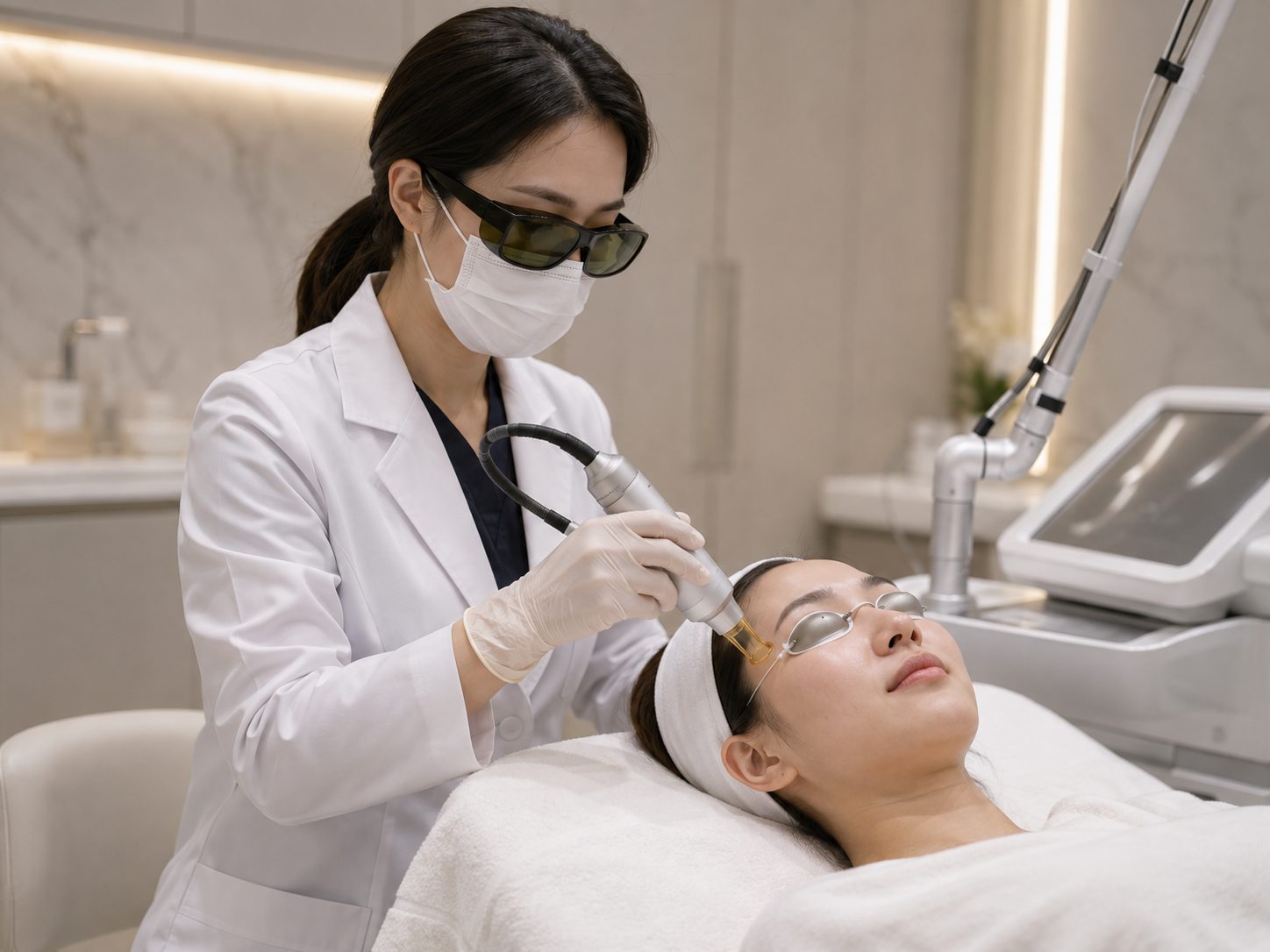
First Check Whether the Treatment Is Actually a Laser
Some clinic menus group lasers, IPL, radiofrequency, and focused ultrasound under broad aesthetic categories.
They are not the same technology.
The U.S. FDA describes medical lasers as devices using precisely focused light with a specific wavelength.
The FDA also states that intense pulsed light, or IPL, is not a laser.
Radiofrequency uses electrical energy to create heat in tissue.
Focused ultrasound uses acoustic energy to create localized tissue effects.
Different technologies can solve different problems and use different pricing units.
Korean Laser Skin Treatment Price: Session vs Package Cost
A low single-session price can be useful when the treatment plan genuinely requires one appointment.
It becomes misleading when several sessions are proposed but only the first session is advertised.
Ask how many sessions are being recommended and when progress will be reviewed.
Confirm package expiry, rescheduling, and refund conditions.
International visitors should also check whether the proposed spacing fits their stay.
The Skin Concern Can Change the Treatment Plan
Pigmentation is not one diagnosis.
Freckles, sun-related spots, melasma, and post-inflammatory pigmentation can behave differently.
Acne scars and deeper texture concerns can require another laser approach entirely.
Melasma deserves particular caution.
A 2026 meta-analysis of five randomised trials compared 755-nm picosecond alexandrite laser with other treatments.
Triple-combination cream produced greater MASI improvement than the laser in the pooled comparison.
Post-inflammatory hyperpigmentation was more common with the laser than with topical creams.
The authors rated the overall certainty as low because the trials were small and heterogeneous.
That does not make every picosecond treatment ineffective.
It does show why “pico” should not be treated as a universal melasma upgrade.
A 2024 review in skin of colour also reported pigment worsening after some laser treatments.
The concern, skin characteristics, and previous pigment response should therefore influence the plan.
Why a Promotional Price Can Be Incomplete
A low promotional price may cover a smaller area, introductory session, lighter mode, or limited package.
The problem is unclear scope, not the low price itself.
Before paying, ask:
Is the advertised amount for one spot, one zone, or the full face?
Is it a new-patient or first-session promotion?
Which device and treatment mode are included?
Is topical anaesthetic included when needed?
Are soothing care or aftercare products separate?
Is another procedure being recommended as an add-on?
Are taxes and clinic fees included in the final total?
Does the package have validity or rescheduling conditions?
Compare the complete payable price for the treatment you are actually receiving.
Want a laser quote you can actually compare? Ask for the exact device, mode, area, session plan, included care, and complete written price. |
How to Compare Two Seoul Laser Quotes Properly
Put both quotes side by side.
The treatment details should match closely enough for a meaningful comparison.
1. Confirm the same skin concern is being assessed.
2. Confirm the same technology or clearly understand why it differs.
3. Compare the exact treatment area.
4. Compare one session with one session, or course with course.
5. Check preparation, anaesthetic, aftercare, and add-ons.
6. Confirm who assesses the skin and performs the procedure.
7. Compare follow-up and support after you leave Korea.
If one clinic recommends a different technology, ask why.
Price alone does not prove treatment quality.
Clinical reasoning and treatment scope matter more.
Downtime Belongs in the Budget Too
Visible redness, swelling, crusting, sensitivity, or pigment changes can affect an international patient’s travel plans.
Recovery varies with the device, settings, area, and individual response.
The FDA lists potential laser risks including pain, infection, scarring, and skin-colour changes.
AAD guidance also stresses medical consultation and careful sun protection around laser procedures.
Ask how your treatment may affect flights, outdoor sightseeing, work, or important photographs.
Do not schedule an unfamiliar laser procedure immediately before a fixed event.
Skin Tone and Pigment Risk Should Affect the Decision
Darker skin can be more prone to post-inflammatory hyperpigmentation after inflammation or injury.
This does not make laser treatment automatically unsuitable.
It makes device choice, settings, diagnosis, and practitioner experience especially important.
A 2024 systematic review included 1,356 people with skin of colour and examined post-inflammatory hyperpigmentation treatments.
Laser therapy produced partial improvement in some participants, but worsening was also reported.
Ask how the clinic assesses pigment risk and what aftercare is recommended for your skin.
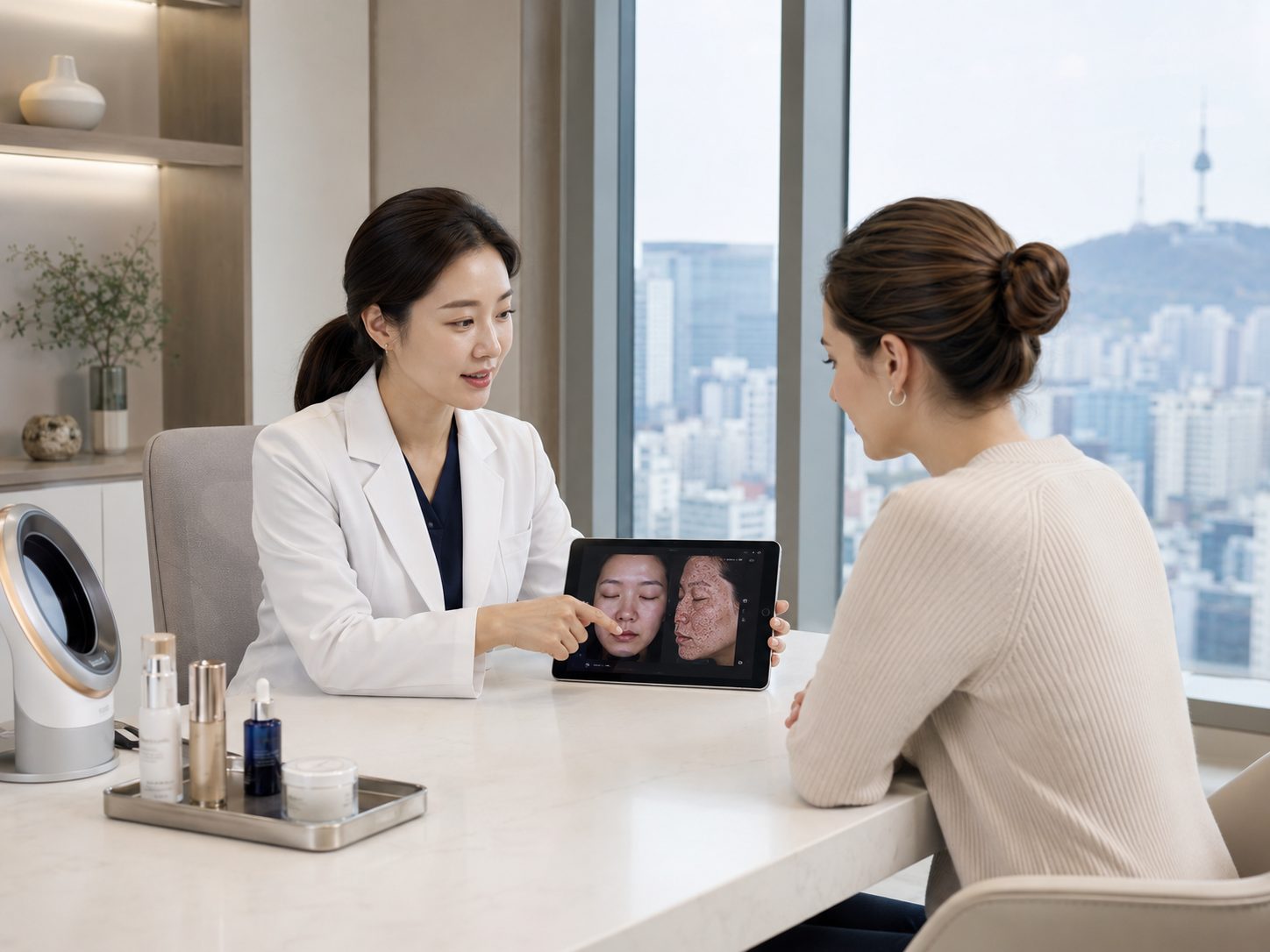
Current Fornur Laser Treatment Route
Fornur currently lists Laser Skin Rejuvenation at UPIC Clinic Myeongdong.
The live listing covers a picosecond laser pathway for selected pigmentation and rejuvenation concerns.
The Fornur listing itself does not publish a fixed treatment price.
The clinic must confirm the exact treatment, current price, session plan, expected recovery, and availability.
Fornur also has a broader Skin & Aesthetic services category for treatment discovery.
Medical Korea maintains a directory of institutions registered to serve foreign patients.
Registration supports provider verification, but it does not guarantee treatment suitability or results.
Use the Facial Treatments in Korea guide when you are still comparing lasers with other treatment categories.
The consultation request submitted through Fornur can be free.
Laser treatment itself is not free unless the clinic explicitly confirms otherwise.
Questions to Ask Before You Pay
What exact concern are you treating?
What is the full device and treatment name?
Which wavelength, mode, lens, or tip will be used?
Which areas are included in the quoted price?
Is the quote for one session or a course?
What preparation, anaesthetic, and aftercare are included?
Who will assess my skin and perform the procedure?
What visible recovery should I expect?
What happens if my pigmentation worsens?
How will follow-up work after I leave Korea?
What is the final payable amount?
Conclusion
A Korean laser skin treatment price only becomes meaningful when you know exactly what sits behind it.
Compare the concern, technology, treatment mode, area, sessions, included care, practitioner, recovery, and total payable cost.
For international patients, travel timing and follow-up belong in the same decision.
Use Fornur’s Skin & Aesthetic services to compare current options.
Then request an itemised consultation before paying for a laser package.
How This Guide Was Prepared
This guide is designed to help foreign residents and visitors understand common questions before making a decision. Details should always be confirmed directly with the relevant provider or an appropriately qualified professional.
- Author
- Mustafa
- Last reviewed
- October 24, 2026