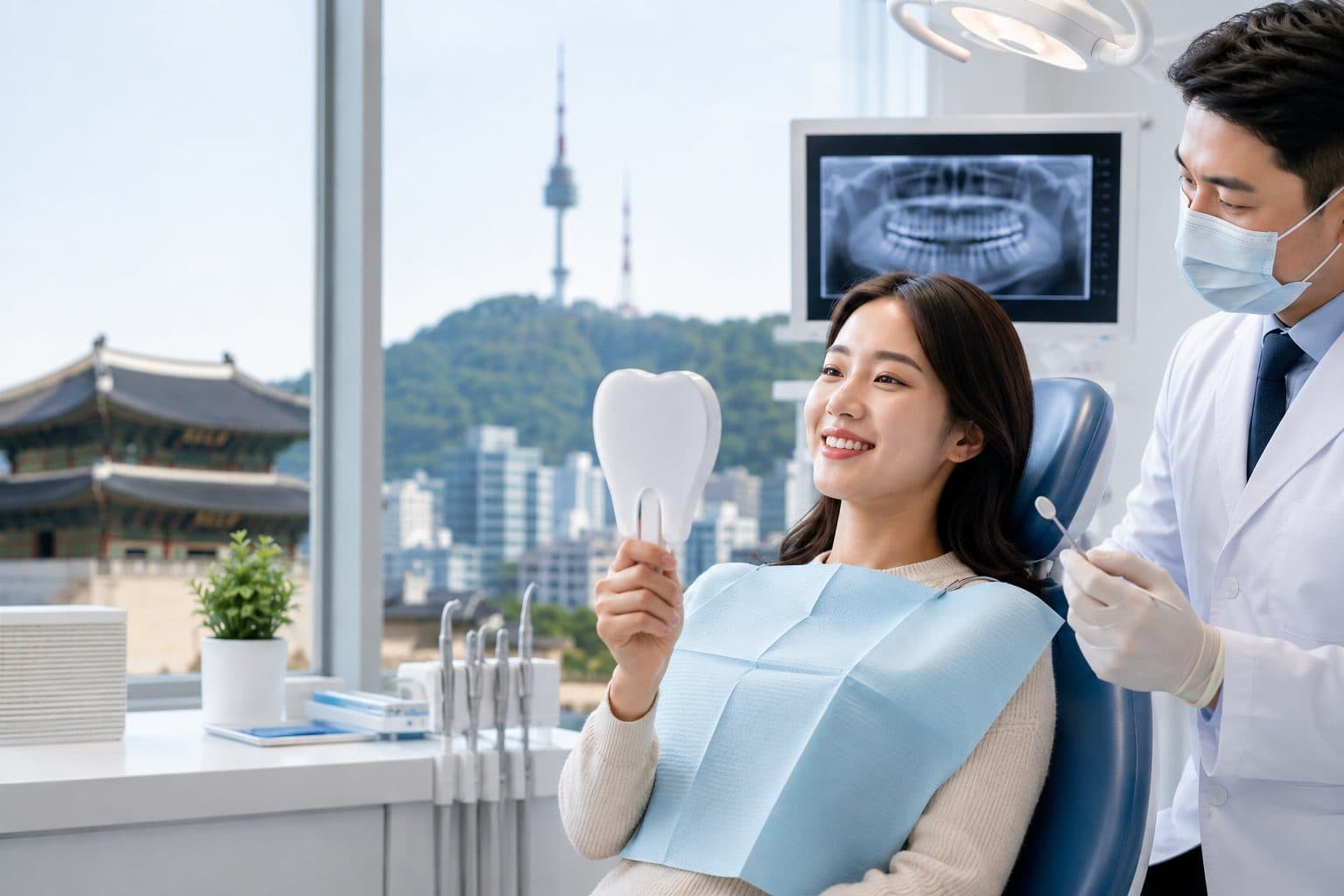


Dental implant cost in Korea is difficult to judge from a single clinic advertisement. If you are travelling to Seoul, the price of the final restoration, repeat appointments and follow-up after returning home can matter as much as the advertised starting fee.
This guide compares Korea's published 2026 fee data with the questions a foreign patient needs to ask about treatment stages, quoted services and travel. It is general information—not a diagnosis, an all-inclusive price list or a confirmed offer from any provider.
Quick answer: How much does a dental implant cost in Korea?
Korean reporting on HIRA's September 2026 non-covered-fee disclosure gives an average dental implant fee of approximately ₩1,181,000 (about 1.18 million won). This is a reported national average, not a price guaranteed to visitors or an all-inclusive clinic quotation.
The actual total depends on the fixture, restoration, imaging, any extraction or bone graft and follow-up. The primary source is the 2026 HIRA announcement; the published average is separately reported by Korean news coverage of that disclosure.
HIRA's 3 September 2026 press release offers two examples from the 'dental implant (zirconia)' fee category: a clinic in Gyeongnam reported a ₩1,100,000 median fee, while a different clinic in Seoul reported a ₩1,720,000 highest fee.
They are different institutions and different summary measures—not a nationwide minimum–maximum range or a Fornur quote. Read the 2026 HIRA price announcement and use the HIRA non-covered fee search for provider-level disclosures.
An advertised starting figure may exclude scans, extractions, bone grafting, the abutment or final crown. Conversely, a higher fee may include services another provider charges for separately. Compare itemised written plans - not headline prices.
Fornur's Dental Implants treatment page currently displays an indicative starting price of ₩600,000, subject to clinical assessment; this is not a guaranteed all-inclusive fee. Planning care in Seoul? Explore the treatment page and request a written, personalised quotation before making travel arrangements.
What should a complete dental implant quote include?
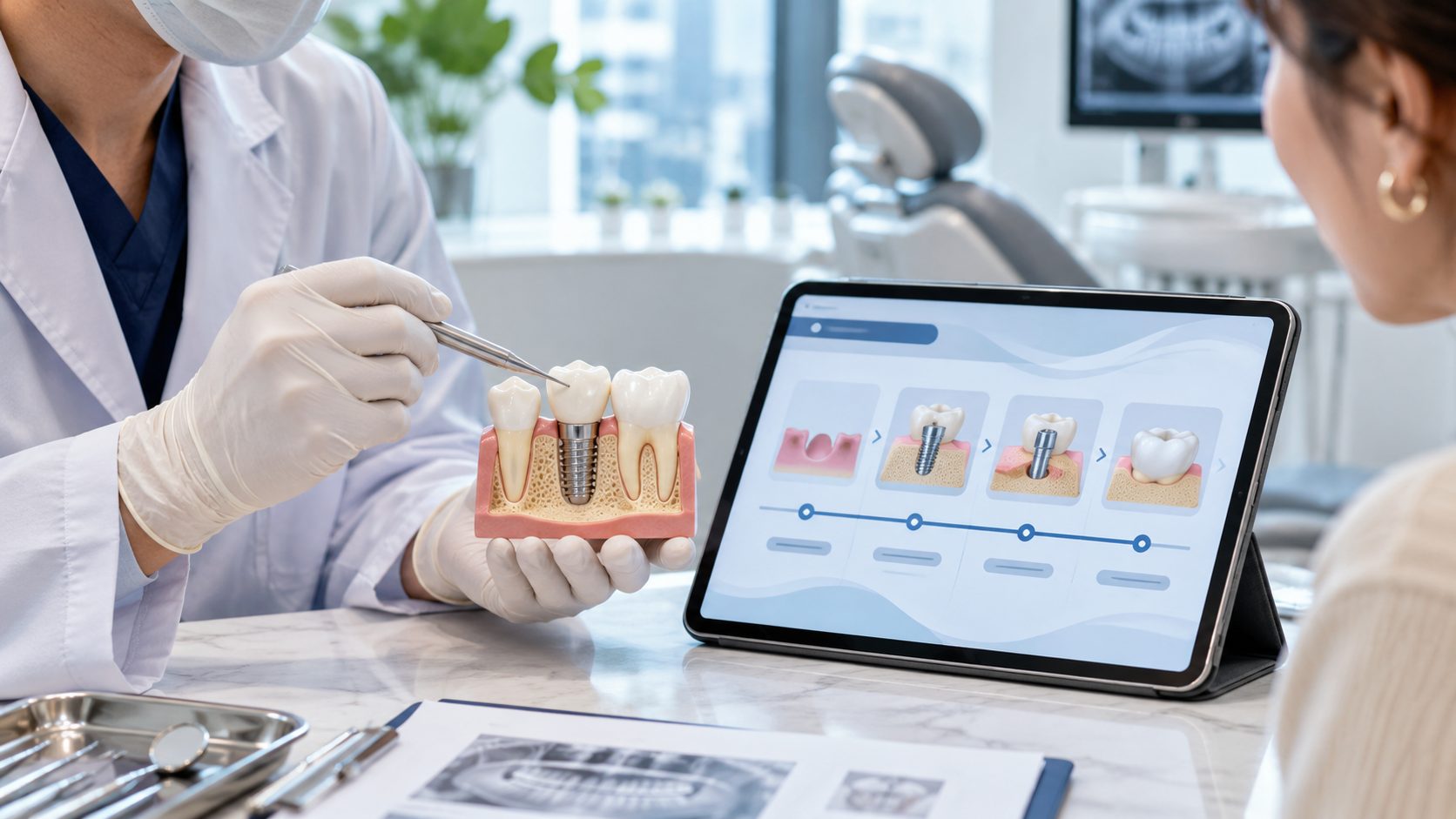
An implant-supported replacement generally involves a fixture placed in the jawbone, a connection component (abutment), and a crown or another restoration. The FDA's dental implant guidance explains these parts and why patient health, maintenance and follow-up are important.
Ask the clinic to separate the following in writing:
Clinical examination and imaging, including whether a CT scan is necessary.
Implant fixture: manufacturer, model and number of implants.
Abutment and final crown or other restoration, including the material.
Tooth extraction, periodontal treatment, bone grafting or sinus lift when indicated.
Surgery fees, anaesthesia or sedation, prescriptions and temporary teeth if applicable.
Review appointments, adjustments, complications, replacement policy and aftercare.
Payment schedule, currency, taxes and what happens if the plan changes after examination.
If you receive two quotes, compare the same components. A price for 'one implant' and a price for 'one completed tooth' may describe different packages.
Why do published Korean implant prices differ?
HIRA publishes non-covered fee information to support price comparisons across medical institutions. Its 2026 announcement explains that fees for apparently similar services can differ because of treatment details, complexity, staff and equipment. A published fee is not necessarily the final amount on a patient-specific treatment plan.
Other cost drivers include how many teeth are missing, their locations, whether there is active gum disease, bone quality, the restoration material and whether treatment can be staged safely within your travel schedule.
If you are exploring available options, see Fornur's Dental Implants treatment page. Its displayed starting-price information is indicative: a dentist must confirm suitability and provide the actual treatment plan and full quote.
How long does a dental implant take? Plan for staged care
The common stages are assessment and imaging, any preparatory care, placement of the implant, healing, and fitting of the final restoration. These steps may involve several appointments across months, not one completed treatment during a short holiday.
Guy's and St Thomas' NHS implant guidance explains that the implant may need at least three months to heal before supporting replacement teeth. Bone grafting can extend the timetable. This is general clinical guidance rather than a fixed appointment schedule for treatment in Seoul; timing depends on the patient's condition and the clinician's plan.
A traveller should confirm which appointments must happen in person, whether follow-up can be performed by a dentist at home and whether that dentist will have the correct implant-system information. Do not book return flights assuming the permanent crown can be fitted immediately.
Can you get dental implants in one trip to Seoul?
Sometimes a clinic can perform an assessment or implant placement during one visit. That is different from completing the entire treatment. Immediate temporary teeth may be an option in selected cases, but they are not a promise of immediate permanent restoration or fully integrated bone.
Ask the treating dentist for a written timetable that distinguishes surgery, post-operative review, healing, any temporary restoration and the final crown. Verify whether a second journey is necessary before paying for travel.
What risks should you discuss before proceeding?
Dental implant surgery has recognised risks, including infection, injury to nearby teeth or nerves, problems with the surrounding bone or gums and implant failure. Smoking, some medical conditions and poor oral hygiene may affect healing and long-term outcomes. The FDA recommends discussing your health and keeping the implant brand and model for your records.
The best treatment is not always an implant. If a natural tooth might be preserved, ask about alternatives first. For an affected but potentially restorable tooth, read Fornur's Root Canal Treatment in Korea overview and discuss the choice with a qualified dentist.
Aftercare cannot be postponed until the next holiday. Ask how to reach your clinic for increasing pain, swelling, a loose component or another unexpected problem, and establish local emergency dental care before travelling.
Korean insurance and visitor pricing: what to check
If you are visiting Korea for dental care, do not assume you are enrolled in Korea's National Health Insurance. The National Health Insurance Service (NHIS) guidance for foreigners describes eligibility and enrolment rules, including residence-based conditions, that do not automatically apply to short-term visitors. If you live in Korea, your insurance status may be different. Confirm your own eligibility and the specific procedure's coverage with NHIS or your insurer before relying on an insured price.
Before booking, clarify which services are uninsured, whether quoted charges include laboratory work and what payment or refund policy applies if a procedure changes or cannot proceed.
How to compare Seoul dental clinics as a foreign patient
Choose based on the clinical plan, not a promotional package. Ask who will actually perform the implant placement, how their qualifications can be verified, which system will be used and how complications or maintenance will be handled after you leave Korea.
Bring any recent dental images, a list of medicines, relevant health conditions and your preferred travel window. Ask whether an interpreter is available for consent discussions, and request copies of scans, treatment notes and implant-system details before returning home.
For broader questions about dental travel and choosing a provider, read Fornur's Dental Treatment in Korea for Foreigners guide or explore the Fornur Dental treatments hub. These pages help you compare other procedures; the present article focuses on implant price components and the staged care a visitor may need.
Questions to ask before accepting a price
What is the diagnosis, and could the natural tooth be saved?
Does the quotation cover the fixture, abutment, crown, imaging and follow-up?
What implant brand and model will be used, and can I receive the identifiers?
Is an extraction, bone graft or sinus lift likely, and how would that change the quote?
How many in-person appointments will I need, and when can the final restoration be fitted?
Which complications should prompt urgent review, and what support will be available after I travel home?
Who is responsible for maintenance if a local dentist needs to examine or repair the restoration?
Plan your dental implant enquiry through Fornur
Fornur can help you explore dental treatment information and submit a consultation enquiry. Use the Dental Implants treatment page to describe the tooth or teeth involved, prior dental work, any scans, your preferred dates and your questions about the full cost.
Request a dental-implant consultation through Fornur. An enquiry is not an appointment confirmation, a clinical assessment or a guaranteed final price. Provider availability and treatment suitability require verification.
Final takeaway
For an overseas patient, the safest and most useful implant quote is not simply the cheapest one. It is a treatment plan that explains the entire restoration, follow-up, clinical risks and how care will continue after travelling home. Start with a dentist's assessment, then compare like-for-like written quotes.
Sources and further reading
2026 HIRA price announcement - official government disclosure and provider examples.
HIRA non-covered fee search - Korean-language database for provider-specific disclosed fees.
Korean news report on 2026 average implant price - documents the ₩1,181,000 average and its reporting context.
NHIS guidance for foreigners - official Korean insurance eligibility guidance.
FDA's dental implant guidance - implant components, health factors and possible complications.
NHS implant treatment guidance - surgical stages, healing and possible bone-grafting delays.
NHS post-surgery advice - practical post-operative guidance and reviews.
How This Guide Was Prepared
This guide is designed to help foreign residents and visitors understand common questions before making a decision. Details should always be confirmed directly with the relevant provider or an appropriately qualified professional.
- Author
- Mustafa
- Last reviewed
- November 19, 2026