

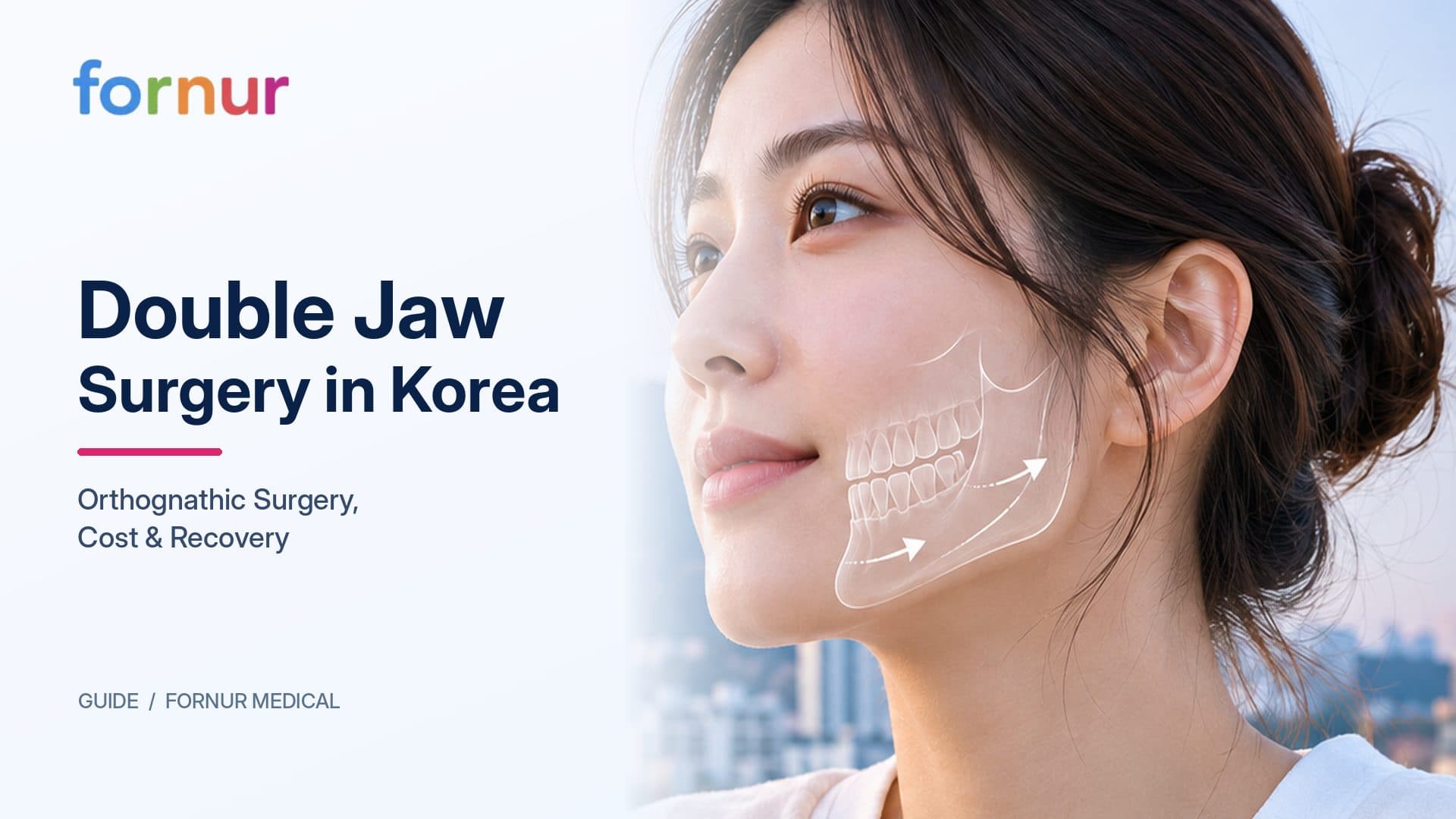
A different jawline is one thing. Correcting how your upper and lower jaws fit together is another.
Some people researching double jaw surgery in Korea have trouble biting or chewing. Others want to understand facial asymmetry.
Both concerns deserve a proper diagnosis before anyone suggests an operation.
Double jaw orthognathic surgery can reposition both jaws. It is not simply a slimmer-face treatment or another name for V-line surgery.
This guide explains who might need it, how planning works, what recovery involves and how to compare costs responsibly.
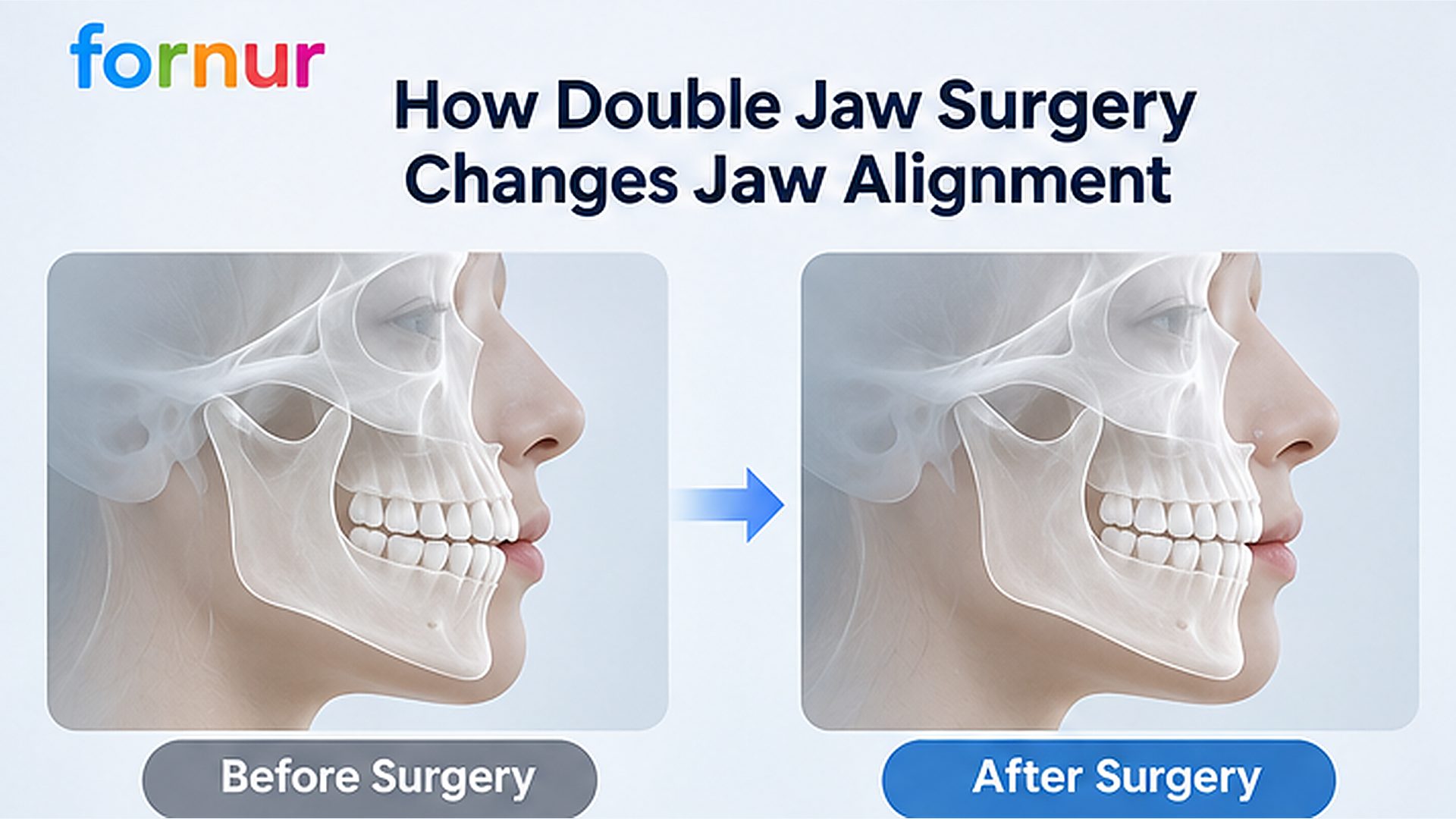
Quick Answer: What Is Double Jaw Surgery?
Double jaw surgery, also called bimaxillary orthognathic surgery, repositions the upper jaw (maxilla) and lower jaw (mandible).
An oral and maxillofacial surgeon plans these movements to correct skeletal jaw relationships and improve the bite when appropriate.
Changes in facial profile can follow, but appearance alone does not determine whether two-jaw surgery is necessary.
The American Association of Oral and Maxillofacial Surgeons explains that double-jaw osteotomy addresses complex misalignment and asymmetry.
Not everyone with a prominent jaw needs an operation. Some patients need orthodontics alone or surgery on only one jaw.
If you are researching treatment in Korea, ask Fornur whether a corrective-jaw specialist pathway is currently available.
What Problems Can Corrective Jaw Surgery Address?
A jaw operation is considered when the bones, not just the teeth, contribute to a significant problem.
An underbite or overbite related to the position of the jaws.
An open bite, where the front teeth do not meet when the mouth closes.
Significant skeletal facial asymmetry affecting jaw relationships.
Difficulty chewing or biting that may arise from jaw misalignment.
Selected breathing or obstructive sleep apnoea concerns after specialist assessment.
Certain developmental, injury-related or congenital skeletal differences.
AAOMS's 2025 orthognathic indications are clinical guidelines, not a self-diagnosis checklist. The surgeon must assess each case individually.
An orthodontist and oral and maxillofacial surgeon should examine the bite and skeletal structure together.
A patient with straight-looking teeth may still have a jaw relationship problem. The opposite is also possible.
Double Jaw vs Single Jaw Surgery: What Is the Difference?
The operation should match the diagnosed jaw discrepancy. More surgery is not automatically better.
Upper-jaw surgery: A maxillary osteotomy repositions the upper jaw to address selected skeletal and bite problems.
Lower-jaw surgery: A mandibular osteotomy changes the lower jaw position when indicated.
Double-jaw surgery: A bimaxillary osteotomy repositions both jaws during one planned operation.
Additional procedures: Some plans include chin surgery or other corrections, but these must be separately justified.
AAOMS describes the surgical choices and stresses that each plan should follow an individual assessment.
A surgeon may recommend one jaw rather than two after reviewing the bite, facial balance, imaging and treatment goals.
Double Jaw Surgery vs V-Line Surgery in Korea
Searching for Korean jaw surgery can surface both corrective procedures and cosmetic contouring. They address different needs.
Double-jaw orthognathic surgery primarily changes the relationship between the upper and lower jaws. Bite correction and function guide planning.
V-line and cosmetic jaw-reduction surgery reshape selected lower-face bones for contour. They do not automatically correct an abnormal bite.
A slimmer-looking lower face is not proof that corrective surgery is required. Likewise, an attractive profile cannot confirm a healthy bite.
For cosmetic bone contouring, read Fornur's Korean Jawline Surgery guide. Its V-line and jaw-reduction information serves a different decision.
The separate Jaw Reduction Surgery treatment page covers cosmetic contouring, not an active corrective double-jaw surgery service.
How Do Surgeons Plan Orthognathic Surgery?
Good planning usually involves two specialists: an orthodontist and an oral and maxillofacial surgeon.
They may also involve an anaesthetist, restorative dentist and other clinicians depending on the case.
Your team should explain each assessment and how the results affect the operation.
Dental and medical history, including previous braces, jaw surgery and relevant symptoms.
Clinical examination of jaw movement, facial proportions and bite relationships.
Dental photographs, scans or impressions to understand how the teeth meet.
Imaging, sometimes including three-dimensional scans, when clinically necessary.
Joint and airway assessment when symptoms suggest additional concerns.
A written treatment plan covering orthodontics, surgery, recovery and follow-up.
Can Braces Alone Fix the Problem?
Sometimes. Orthodontic treatment can move teeth, but it cannot fully reposition an incorrectly aligned jawbone.
When the skeletal relationship causes the problem, orthodontics and surgery may be planned together.
Do not assume an advertised surgery package replaces long-term orthodontic treatment.
What Happens During Double Jaw Surgery?
Double jaw surgery takes place under general anaesthesia in a properly equipped surgical setting.
Surgeons use planned bone cuts to reposition the upper and lower jaws. Plates and screws commonly help stabilise the new positions.
Incisions are often inside the mouth, although the exact approach and any external scars depend on the procedure.
An upper-jaw movement may involve a Le Fort I osteotomy. Lower-jaw repositioning commonly uses a sagittal split osteotomy.
Those names describe techniques, not a recommendation for your case.
The surgical team should explain what movements are planned, how the bite is secured and which risks apply.
Mayo Clinic's surgical overview explains how jawbones may be repositioned using planned movements and fixed in place during healing.
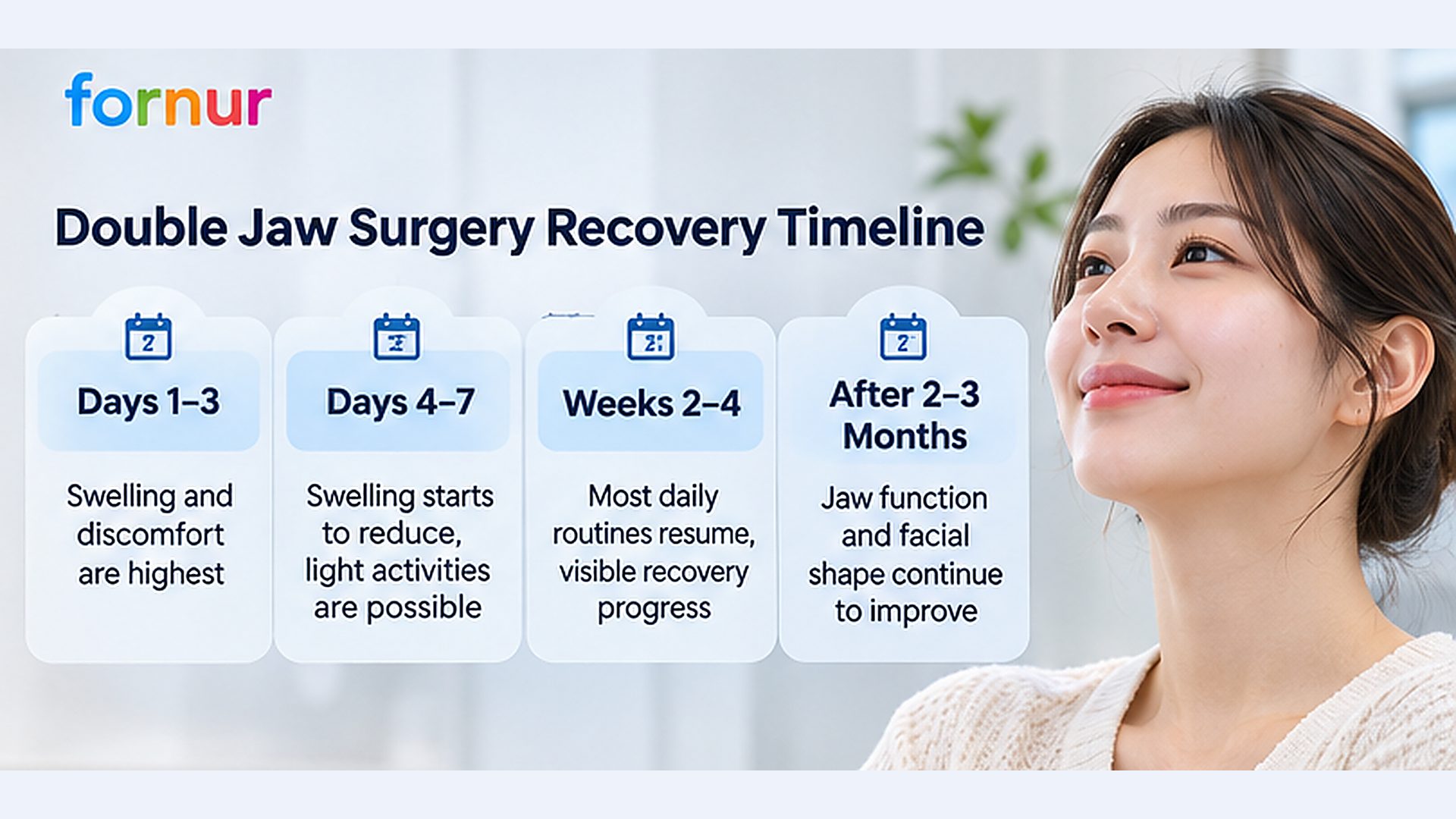 How Long Does Double Jaw Surgery Recovery Take?
Recovery is measured in stages. Returning to daily activities is not the same as full bone and bite healing.
The timeline below is general. Your surgeon may recommend different limits based on the operation.
First Days: Hospital Monitoring and Swelling
Many patients require inpatient observation after surgery. The team monitors breathing, bleeding, pain, hydration and early healing.
Swelling, facial tenderness, nasal congestion and numbness may occur. Follow the hospital's instructions rather than internet checklists.
The care team should explain medications, oral hygiene and which symptoms require urgent review.
Weeks 1–2: Diet and Early Recovery
Swelling and discomfort often improve gradually. Eating may be restricted to liquids or soft foods according to the surgical plan.
Jaw movement can be limited. Follow the team's instructions about elastics, cleaning, activity and sleeping position.
Do not force chewing or advance your diet without clearance.
Weeks 3–6: Gradual Return to Routine
Some patients return to desk work or study during this period. Others need longer because of fatigue or complications.
Your surgeon will decide when normal activity and different foods are safe.
AAOMS describes ongoing swelling, numbness and dietary restrictions during recovery.
Months 2–6 and Beyond: Bite Stabilisation
Bone healing, numbness changes and orthodontic adjustments can continue for months.
The appearance also changes as swelling resolves. Full healing and orthodontic completion may take considerably longer.
Keep appointments with both the surgeon and orthodontist. They assess different parts of the outcome.
What Are the Risks of Double Jaw Surgery?
Corrective jaw surgery is substantial surgery. Discuss the individual risks before consenting or paying a deposit.
Bleeding, infection and complications related to general anaesthesia.
Temporary or persistent numbness affecting lips, chin or other areas.
Damage to teeth, roots or nearby structures.
Unwanted bite changes, persistent asymmetry or limitations in mouth movement.
Jaw-joint problems, bone-healing problems or relapse of jaw position.
Need for further treatment or revision in selected cases.
Cambridge University Hospitals describes altered sensation and bite adjustment as important consent issues.
Contact your treating team urgently for heavy bleeding, breathing difficulty, fever, severe worsening pain or other unexpected symptoms.
If symptoms are severe or rapidly progressing, seek local emergency medical care.
Before-and-After Results: What Can Photos Actually Show?
Orthognathic surgery before and after photos can help explain changes in profile, symmetry and jaw position.
They cannot prove improved chewing, a stable bite or successful long-term healing without clinical assessment.
Look for genuine cases with permission, consistent angles and accurate timing after surgery.
Ask whether orthodontics, genioplasty or another facial procedure contributed to the appearance.
Be cautious about comparing an early swollen photograph with a long-term result.
Before-and-after galleries should show consented, accurately dated patient photographs. Illustrations and simulations are not evidence of actual outcomes.
This guide does not currently provide a verified patient before-and-after photo series.
How Much Does Double Jaw Surgery Cost in Korea?
There is no single reliable Korean price that fits every corrective jaw surgery case.
An online headline may exclude orthodontic treatment, hospital care or follow-up outside the surgery itself.
The cost depends on what needs correcting, whether one or both jaws move and how complex the treatment is.
A written estimate should separate these components:
Specialist consultations and diagnostic examinations.
Orthodontic preparation and post-surgical adjustment.
Scans, imaging, dental models and other required tests.
The surgeon, operating facility, anaesthesia and hospital stay.
Surgical materials, prescribed medicines and immediate aftercare.
Follow-up visits, possible complications and revision policies.
Travel, accommodation, local support and changes to flights.
Do not compare a one-jaw cosmetic package with a complete bimaxillary orthodontic-surgical plan.
Ask for an itemised quotation in Korean won and confirm all taxes, deposits and cancellation conditions.
For general Korea treatment enquiries, contact Fornur to confirm whether qualified orthognathic specialists are available. An enquiry is not a booking.
Fornur's Plastic Surgery category offers general treatment information. It does not establish a verified double-jaw price or active surgical booking.
Questions to Ask Before Choosing Double Jaw Surgery in Seoul
Bring these questions to an appropriately qualified oral and maxillofacial surgeon and orthodontist.
What skeletal or bite problem has been diagnosed, and can it be treated without surgery?
Why is double-jaw surgery recommended instead of upper- or lower-jaw surgery alone?
What orthodontic preparation is required and who manages it after the operation?
Which imaging tests and surgical movements are planned?
Who is the named operating surgeon, and what are their qualifications?
Where will surgery take place and what hospital monitoring is available?
What are my particular nerve, airway, infection, relapse and revision risks?
What are the diet, inpatient, follow-up and travel requirements?
What is included in the full treatment cost, including braces and complications?
Who handles my care once I return to my home country?
Keep a copy of the proposed plan and confirm who is responsible for each stage.
Planning Double Jaw Surgery in Korea as an International Patient
The challenge is continuity of care. Surgery and orthodontics may require months or years of coordinated visits.
Do not arrange a short tourist stay around a procedure that needs prolonged monitoring.
Confirm the local surgeon and your home-country orthodontist can coordinate treatment, records and follow-up.
Ask about language support, emergency arrangements, medical records and potential complications after travel.
Check the official Medical Korea registered-hospitals directory when verifying an institution. Confirm the treating surgeon's credentials separately.
The British Orthodontic Society explains the treatment journey and includes patient education resources.
Check Current Fornur Medical Information
For a starting point, explore Fornur's Plastic Surgery category and learn how its general medical enquiry service works.
If your concern involves a bite or skeletal jaw problem, ask whether an appropriate orthognathic specialist pathway is currently available.
Message Fornur for an availability update. Do not interpret an enquiry as a confirmed consultation or surgery booking.
The Bottom Line
Double-jaw surgery is a major corrective procedure, not a standard cosmetic jaw-slimming service.
The right decision starts with a diagnosis, an orthodontic plan and a qualified oral and maxillofacial surgical team.
Compare the complete treatment journey, not just photographs or an advertised price.
If you need current service information in Korea, explore Fornur's Plastic Surgery category and message Fornur about availability.
Medical note: This article provides general information, not a diagnosis or treatment recommendation. A qualified clinical reviewer must approve it before publication.
How This Guide Was Prepared
This guide is designed to help foreign residents and visitors understand common questions before making a decision. Details should always be confirmed directly with the relevant provider or an appropriately qualified professional.
- Author
- Mustafa
- Last reviewed
- November 2, 2026