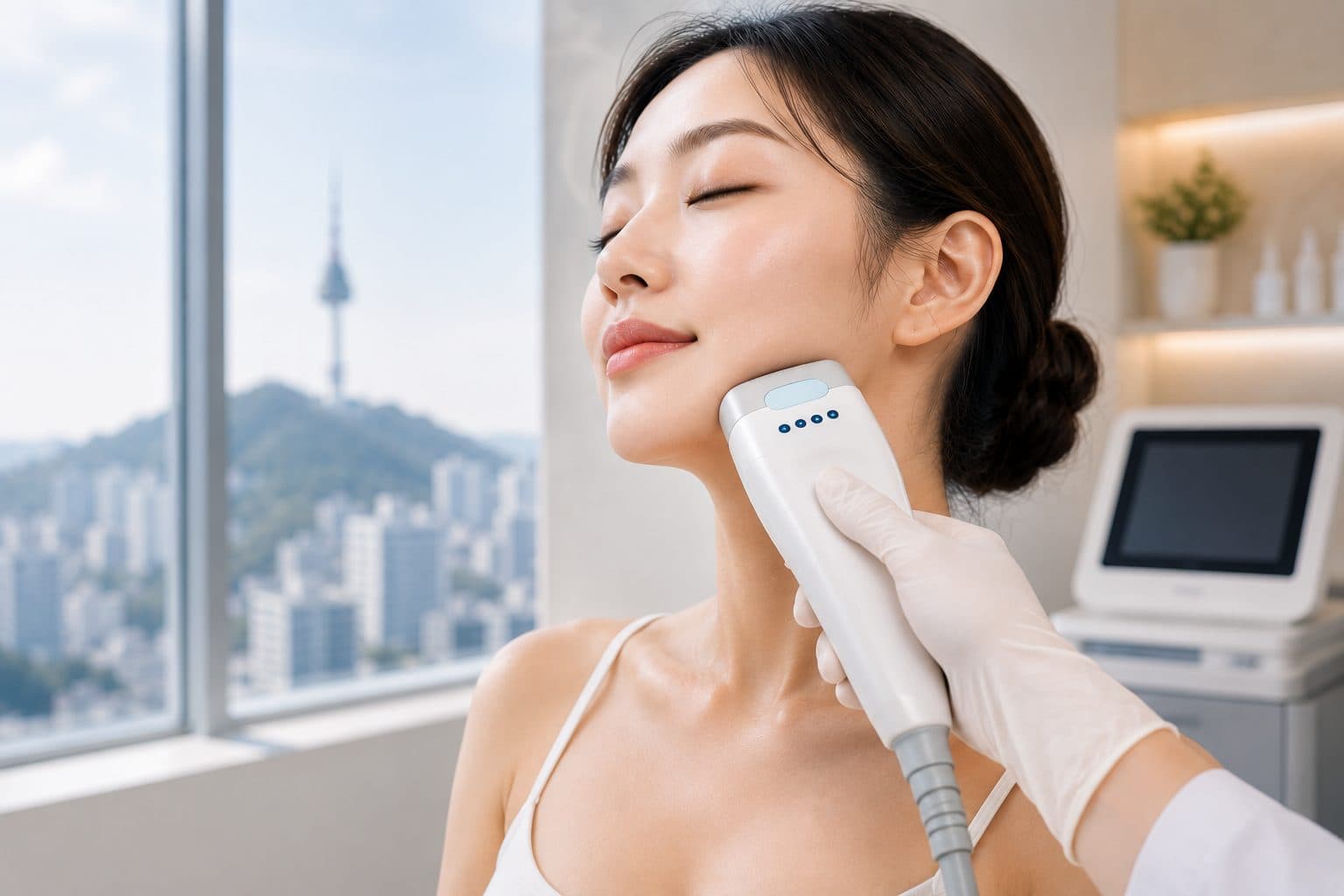


Your jaw can look wide for several reasons. Bone is only one of them.
Korean jawline surgery targets bone, so the cause behind the shape matters.
A broad mandibular angle needs a different plan from a short chin or enlarged masseter muscles.
If your bite is involved, cosmetic contouring may not be the right treatment category.
This guide explains V-line surgery, jaw reduction, genioplasty, cost, recovery, risks, and travel planning.
Not sure whether the concern is bone or soft tissue? Start with the treatment category before comparing packages. Fornur’s Beauty & Medical hub can help you explore the current options. |
Quick Answer
Korean jawline surgery reshapes selected lower-face bones for cosmetic contouring.
Common procedures include mandibular angle reduction, V-line contouring, and genioplasty.
These operations are not interchangeable.
V-line surgery may combine jaw reduction with chin reshaping.
Orthognathic surgery is different because it corrects jaw relationships and functional problems.
Before comparing clinics, confirm the procedure, surgeon, imaging, anaesthesia, facility, recovery plan, and total price.
Key Takeaways
V-line surgery is a marketing label, not one standard operation.
Jaw width can come from bone, muscle, fat, skin laxity, or chin position.
Cosmetic jaw reduction is different from corrective orthognathic surgery.
Imaging can help assess bone shape, tooth roots, and the inferior alveolar nerve.
Compare itemised surgical plans, not package names or headline prices.
Final facial contour develops after swelling settles, not immediately after surgery.
International patients need a clear review and travel plan before paying a deposit.
Korean Jawline Surgery: What Can It Change?
Cosmetic jawline surgery changes facial bone shape.
It does not simply tighten skin or reduce facial fat.
Mandibular angle reduction changes the lower and rear jaw contour.
Genioplasty reshapes or repositions the bony chin.
A V-line plan may combine both areas.
The exact design should follow your anatomy, not a standard Korean template.
A 2024 study compared two mandibular contouring designs.
The study found different bone and soft-tissue effects between the techniques.
That supports an anatomy-led plan instead of a trend-led package.
Read the 2024 mandibular contouring study
V-Line Surgery, Jaw Reduction, and Genioplasty
Procedure | Main goal | Ask the surgeon |
Mandibular angle reduction | Reduce selected jaw-angle or lower-border prominence. | Which bone area will change, and how will nearby nerves and roots be protected? |
V-line contouring | Create a narrower lower-face outline using one or more bone procedures. | Which osteotomies are included in my plan? |
Genioplasty | Change chin width, height, projection, or position. | Will my chin be reduced, narrowed, advanced, or repositioned? |
Zygoma reduction | Change cheekbone width rather than the jawline itself. | Why is cheekbone surgery being added? |
Orthognathic surgery | Correct jaw position, bite, or skeletal function. | Do my bite or functional symptoms require maxillofacial assessment? |
The label matters less than the surgical plan.
Ask which bones will change and why those changes suit your face.
Korean V-Line Surgery Is Not One Standard Technique
“Korean V-line surgery” does not describe one universal operation.
Surgeons can use different bone cuts and chin-contouring methods.
The planned change should be explained from the front, side, and three-quarter views.
Avoid clinics promising the smallest face or a fixed centimetre reduction.
More bone removal does not automatically mean a better result.
Cosmetic Jawline Surgery vs Orthognathic Surgery
This distinction is critical.
AAOMS defines orthognathic surgery as correction of skeletal abnormalities affecting the upper jaw, lower jaw, or both.
Its primary goal is improving form and function.
Cosmetic jawline surgery focuses on appearance without intentionally correcting a dysfunctional bite.
An underbite, open bite, major asymmetry, or chewing problem needs proper functional assessment.
Speech or breathing concerns can also change the treatment pathway.
Ask whether an oral and maxillofacial surgeon or orthodontist should assess your case.
AAOMS 2025 indications for orthognathic surgery
Is Bone Really Causing the Wide Jaw?
A wide lower face does not always require bone surgery.
Different structures can create a similar appearance.
Searches for facial contouring Korea often mix bone surgery with soft-tissue treatments.
Possible cause | What it changes | Possible treatment category |
Mandibular bone | Creates fixed skeletal width. | Surgical jaw contouring may be discussed. |
Masseter muscle | Adds lower-face width without changing bone. | Muscle-directed treatment may be relevant. |
Facial fat | Adds soft-tissue fullness around the jaw. | Fat-reduction or contouring treatments may be relevant. |
Skin laxity | Blurs jawline definition. | Skin tightening or facelift options may be relevant. |
Chin position | Changes overall lower-face proportions. | Chin-focused treatment may be more relevant. |
Fornur also lists non-surgical Face Contouring at UPIC Clinic.
That service targets soft tissue and does not reshape facial bone.
Use it only when your concern is not primarily skeletal.
Compare non-surgical Face Contouring at UPIC Clinic
What Should Happen During Consultation?
The consultation should start with your actual concern, not a package name.
The surgeon should review facial proportions, dental history, previous procedures, and bite symptoms.
Bone surgery may require CT or other surgeon-directed imaging.
Imaging can show bone anatomy and structures requiring protection.
The inferior alveolar nerve supplies sensation to the lower lip and chin.
Its location matters during mandibular surgery planning.
Which bones will you cut, reshape, reposition, or remove?
Is my chin included in the plan?
Will my bite remain unchanged?
What imaging is required before surgery?
How will the inferior alveolar nerve and tooth roots be protected?
Who will perform the surgery?
Where will the operation take place?
What anaesthesia will be used?
Will plates or screws remain after surgery?
What symptoms require urgent review?
How are revision concerns handled?
How Much Does Jaw Reduction Surgery in Korea Cost?
There is no reliable nationwide price for Korean jawline surgery.
“V-line surgery” can describe very different operations between clinics.
A useful quote should identify every surgical component.
Cost factor | What to confirm |
Procedure scope | Jaw angle, lower border, chin, cheekbones, or combined surgery. |
Surgeon | Named operating surgeon and relevant facial-bone experience. |
Facility | Operating room, recovery area, and planned observation or admission. |
Anaesthesia | Type of anaesthesia and responsible professional. |
Imaging and tests | CT, blood tests, dental review, or medical clearance. |
Hardware | Plates, screws, and other fixation materials when required. |
Follow-up | Reviews, medication, mouth care, and complication support. |
Revision status | Previous surgery can change complexity and price. |
Do not compare quotes until the surgical scope matches.
Ask what could change the price after an in-person examination.
ASPS chin-surgery cost framework
Comparing jawline surgery plans in Korea? Ask clinics to itemise the procedure, surgeon, imaging, facility, anaesthesia, follow-up, and total price. |
Before-and-After Photos: What Should You Compare?
Before-and-after photos can improve your questions.
They should not be treated as a catalogue of guaranteed face shapes.
Compare patients with a similar starting lower-face structure.
Check front, three-quarter, and profile photographs.
Ask which operations were performed in each case.
Jaw reduction plus genioplasty is not jaw reduction alone.
Also ask when the “after” image was taken.
Swelling can hide the final contour for weeks or months.
Recovery After Korean Jaw Surgery
Recovery depends on the amount of bone surgery and any additional procedures.
Early swelling, bruising, tenderness, tightness, and altered sensation can occur.
Some patients can also experience reduced mouth opening during early recovery.
Intraoral incisions can affect eating and oral-care instructions.
The final contour should not be judged during the first week.
Bone healing and soft-tissue settling continue after you feel more functional.
Ask the surgeon for a visit-by-visit recovery plan before booking flights.
ASPS chin-surgery recovery guidance
Risks You Should Understand
Jawline bone surgery has real surgical risks.
These include bleeding, infection, anaesthesia complications, poor healing, asymmetry, persistent pain, and revision.
Lower-lip or chin sensation can also change after mandibular surgery.
The inferior alveolar nerve runs through the mandible.
Other concerns can include contour irregularity, over-reduction, under-correction, dental injury, or unwanted soft-tissue sagging.
No clinic can guarantee perfect symmetry or a specific V-line shape.
Seek prompt medical assessment for unexpected or worsening postoperative symptoms.
Follow the surgical team’s emergency instructions.
ASPS chin-surgery risks and safety
When Can You Fly Home?
Do not plan your trip around the shortest advertised recovery period.
NHS guidance advises avoiding flying for seven to ten days after facial cosmetic procedures.
That is broad guidance, not personal clearance after jaw surgery.
Your surgeon may recommend a longer stay.
Swelling, oral intake, pain control, wound healing, and follow-up can change the timeline.
Ask for travel clearance before booking a non-refundable return flight.
NHS guidance on cosmetic surgery abroad
Planning Surgery in Korea as an International Patient
International patients need a clear care pathway before surgery.
Confirm the surgeon, facility, communication support, medical records, and emergency contact.
Medical Korea provides an official directory of institutions registered to treat foreign patients.
Registration is useful for verification.
It does not guarantee surgeon quality or a specific cosmetic result.
Before leaving Korea, keep copies of your imaging, operation details, medicines, and aftercare instructions.
These records can help if you need medical care after returning home.
Medical Korea Registered Hospitals directory
How Fornur Can Help
Fornur helps international patients explore medical services and request clinic consultations.
A dedicated surgical jawline listing is not currently verified on Fornur.
Current surgical availability should therefore be confirmed through consultation.
Share your main lower-face concern, previous dental treatment, facial surgery, preferred dates, and departure date.
Mention any bite, chewing, speech, or breathing concerns.
The clinic must confirm the surgeon, procedure, imaging, suitability, price, recovery, and follow-up.
Need the right consultation route? Tell Fornur whether your concern involves bone width, chin shape, or a bite-related problem. The clinic must confirm suitability. |
Related Facial Surgery Guides
Planning more than one facial procedure requires careful timing and recovery planning.
Read Fornur’s Asian Rhinoplasty Korea guide for nose-surgery research.
Use the Double Eyelid Surgery Korea guide for crease-surgery planning.
The Korean Face Lift guide explains surgical lifting for soft-tissue laxity.
These procedures should be assessed separately before any combined plan.
Conclusion
Korean jawline surgery is not one standard V-line operation.
The right plan depends on the structure creating your lower-face concern.
Start by separating bone, muscle, fat, skin, chin position, and bite problems.
Then compare the procedure, surgeon, imaging, facility, risks, recovery, and total written cost.
If your bite or jaw function is affected, request proper orthognathic assessment.
A cosmetic package should never replace functional evaluation.
Medical note: This guide is educational. It does not diagnose jaw conditions, select surgery, recommend a surgeon, or replace clinical assessment.
How This Guide Was Prepared
This guide is designed to help foreign residents and visitors understand common questions before making a decision. Details should always be confirmed directly with the relevant provider or an appropriately qualified professional.
- Author
- Mustafa
- Last reviewed
- October 7, 2026