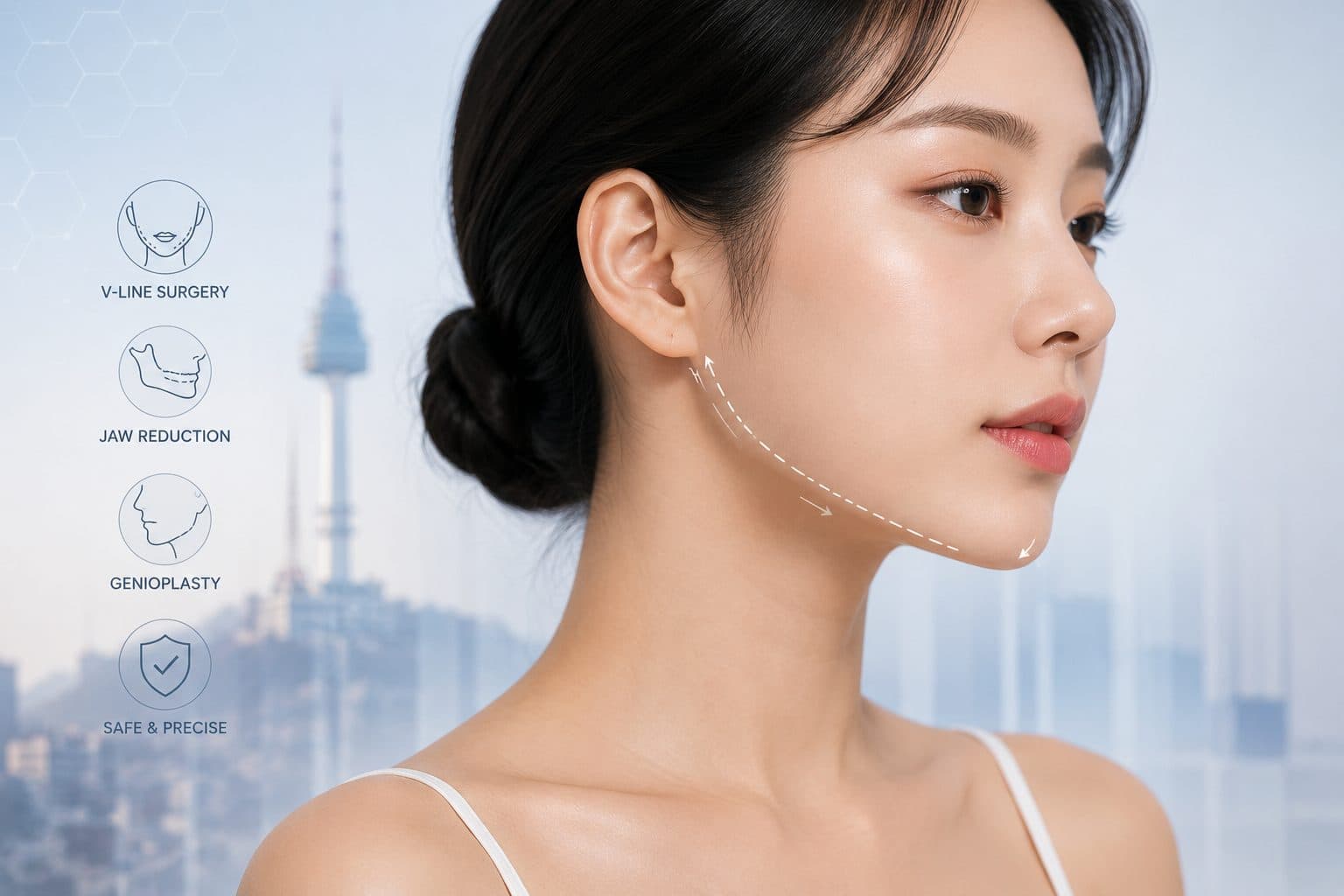


Search for “Korean face lift” and several labels appear immediately: mini facelift, SMAS lift, deep-plane facelift, neck lift, thread lift and device-based “lifting.” They are not different price tiers for the same treatment.
A surgical facelift, or rhytidectomy, repositions selected facial tissues and removes excess skin. The exact plan changes with the area of laxity, the neck, deeper tissue layers and any additional procedure.
For international patients, the key question is not which technique name sounds newest. It is what the surgeon plans to change, why that plan fits your anatomy, and how recovery and follow-up fit around your trip.
This guide breaks down the main facelift types, cost factors, before-and-after photos, recovery, risks and the questions worth asking before you pay a deposit.
Comparing Facelift Options in Korea? Start with the surgical problem and the complete plan - not the newest label or the lowest package price. Fornur can help you explore medical services and request current clinic information. |
Quick Answer
A facelift lifts and repositions selected facial tissues, usually to address sagging in the cheeks, jawline and lower face, and sometimes the neck. “Korean face lift” is a search term, not one standard Korean technique.
Face lift surgery in Korea can include traditional or more extensive facelifts, limited-incision or “mini” facelifts, SMAS-based techniques and deep-plane approaches. A neck lift may be separate or part of the same operation.
Before comparing prices, confirm the exact procedure, treatment areas, surgeon, anaesthesia, facility, follow-up schedule and complete written quote.
Key Takeaways
A Korean face lift is not one standard procedure. The plan should be defined by anatomy and the exact surgical objective.
Mini facelift, SMAS facelift and deep-plane facelift are technique labels — not automatic quality rankings.
Facelift surgery mainly addresses tissue laxity and position. It does not treat every skin, pigment or volume concern.
Compare itemised quotes, not headline prices. Surgeon, facility, anaesthesia, added procedures and aftercare all matter.
Recovery takes weeks, not days. International travel should be planned around postoperative reviews, not the earliest flight home.
Korean Face Lift: What Does a Surgical Facelift Actually Treat?
People researching a Korean face lift are usually concerned about jowling, lower-face laxity, descended cheek tissue or loose skin around the jaw and neck. The American Society of Plastic Surgeons describes facelift surgery, or rhytidectomy, as a procedure used to improve visible signs of ageing in the face and neck.
The operation is not simply “pulling the skin.” Depending on the technique, the surgeon may reposition deeper soft tissues, redistribute or remove selected fat, redrape the skin and remove excess skin.
A facelift is also different from a brow lift, eyelid surgery, resurfacing or volume restoration. If several procedures are proposed, ask what each one is intended to change.
Full Facelift, Mini Facelift and Neck Lift: How Are They Different?
“Full” and “mini” facelift are useful consumer labels, but they are not perfectly standardised recipes. What matters is the extent of surgery, incision pattern, treatment area and degree of correction.
ASPS procedure guidance describes a traditional facelift as commonly using an incision around the ear and into the hairline. Limited-incision approaches use shorter incisions, while neck-lift planning focuses more directly on the jawline, neck and tissue beneath the chin.
Procedure label | General focus | What to clarify |
Traditional / more extensive facelift | Broader lower-face and cheek laxity; neck work may be included | Incisions, tissue layer, treatment boundaries and whether the neck is included |
Mini / limited-incision facelift | More focused or less extensive laxity | What “mini” means at this clinic and what the operation will not treat |
Neck lift | Neck laxity, jowls and/or tissue beneath the chin | Whether it is standalone or combined with a facelift |
Facelift + another procedure | Facial laxity plus another concern | Why each added procedure is needed, plus its separate cost and recovery |
Do not assume a mini facelift is automatically safer, cheaper or better for a younger patient. The surgeon still has to decide whether a limited operation can reach the tissue causing the concern.
SMAS vs Deep-Plane Facelift: What Do These Labels Mean?
When comparing Korean facelift techniques, the SMAS is one term you will see often. It is a fibromuscular soft-tissue layer that surgeons can manage in different ways, so “SMAS facelift” describes a family of operations rather than one exact manoeuvre.
A 2025 review of facelift and neck-lift techniques emphasises tailoring the surgical approach to individual anatomy. A separate 2025 systematic review and meta-analysis reported strong outcomes and high patient satisfaction across both deep-plane and SMAS approaches.
For patients, the practical point is simple: do not choose a surgeon by the technique label alone. Ask which tissue plane will be used, what will be released or repositioned, and why that approach fits your face.
What a Facelift Does Not Treat
A facelift mainly changes tissue position and selected excess skin. It is not a complete treatment for pigmentation, fine surface lines, acne scarring or every type of facial volume loss.
Those concerns may require a separate treatment pathway. If your main issue is mild skin laxity or skin quality rather than significant tissue descent, compare Skin & Aesthetic services or read the Facial Treatments in Korea guide before assuming surgery is the right category.
If a clinic bundles fat grafting, eyelid surgery, brow surgery or resurfacing with a facelift, ask what each addition contributes. A broader rejuvenation package is not simply a more expensive version of the same operation.
Korean Face Lift Cost: What Changes the Quote?
There is no defensible single Korea-wide facelift price that applies to every patient. Cost changes with the operation, treatment area, surgeon, facility, anaesthesia, tests, medicines, added procedures and aftercare.
The ASPS facelift cost framework is useful because it separates the surgeon fee from other possible costs such as anaesthesia and facility charges. US prices should not be imported into Korea, but the itemisation principle is useful when comparing Korean clinics.
Cost component | What to confirm |
Surgeon & procedure | Named surgeon, exact technique, treatment boundaries and whether the neck is included |
Facility & anaesthesia | Where surgery takes place, operating-room fees, anaesthesia type and responsible professional |
Pre-operative assessment | Consultation, tests or medical clearance required for the planned operation |
Additional procedures | Neck lift, fat grafting, eyelid/brow surgery or other additions priced separately |
Post-operative care | Dressings, medicines, stitch/drain care, routine reviews and complication contact |
International support | Interpretation, transport or coordination only when explicitly included in writing |
A quote described only as “mini facelift” or “deep-plane facelift” is incomplete if it does not define the treatment boundaries. Ask whether the price can change after the in-person examination and what would trigger that change.
Need an Itemised Facelift Consultation? Share the area you want assessed, previous facial procedures, preferred dates and departure date. Ask for the exact operation, surgeon, facility, anaesthesia, follow-up plan and total written quote. |
Korean Face Lift Before and After: What Should You Compare?
The search “Korean face lift before and after” is useful only if the photographs help you understand the surgeon’s work rather than create a guarantee.
Compare patients with a broadly similar starting concern, such as jowling, lower-face laxity or neck laxity.
Check which procedures were actually performed. A facelift plus neck lift, fat grafting or eyelid surgery is not a facelift-only result.
Look for consistent lighting, head position, expression and camera distance.
Ask when the “after” photo was taken. Early swelling and tightness can look very different from a later healed result.
Use reference photos to ask, “Which parts of this result are relevant to my anatomy?” rather than “Can I look exactly like this?”
What Should Happen During a Facelift Consultation?
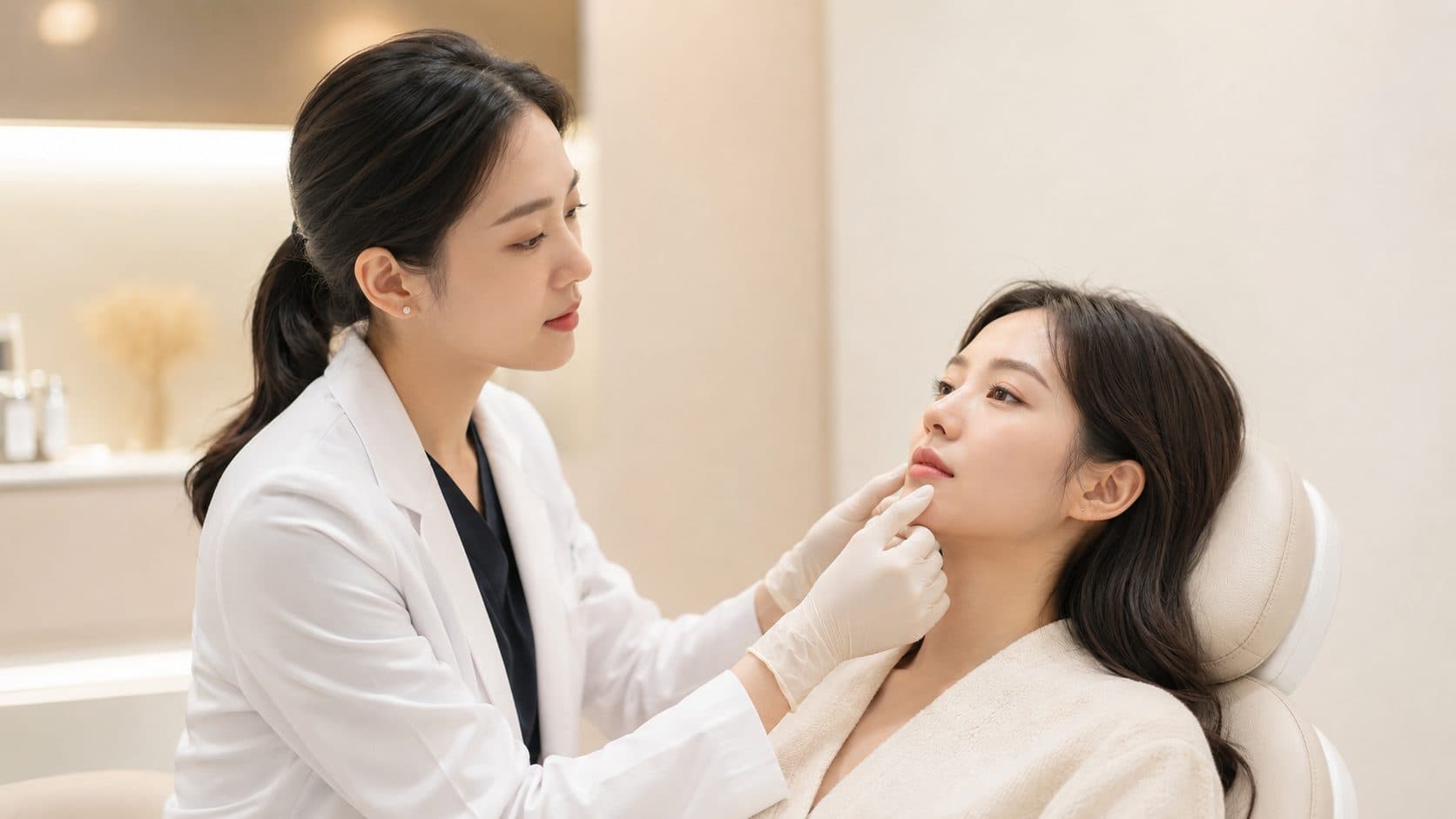
The ASPS consultation guidance recommends discussing goals, medical conditions, allergies, medicines and supplements, tobacco use and previous surgery. The surgeon should also examine the face and neck, skin quality, asymmetry and areas of tissue descent.
By the end of the consultation, you should be able to describe the proposed operation in plain language: what is being lifted, where the incisions are expected, whether the neck is included, what anaesthesia is planned and what recovery support is required.
What exact facelift technique are you proposing, and which tissues are being repositioned?
Which areas are included: cheeks, jawline, neck, beneath the chin or temples?
Will I need another procedure, and why?
Where will the incisions be and how will scars mature?
How are complications handled, and who do I contact outside normal clinic hours?
What is the follow-up schedule in Korea and after I return home?
Facelift Recovery: Plan for Weeks, Not Days
The NHS facelift guide describes general recovery as roughly two to four weeks, while bruising can remain visible for at least two weeks and the final effect continues to settle over several months.
Early recovery can include swelling, bruising, tightness, altered sensation and temporary asymmetry. Dressings, drains or non-dissolving sutures may also affect the first follow-up appointments, depending on the operation.
ASPS results guidance also separates becoming socially presentable from feeling completely back to normal. Do not schedule an important event or long-haul flight around the earliest recovery photo you can find online.
Facelift Risks and Limitations
Facelift surgery carries real risks. ASPS safety guidance lists complications including bleeding, infection, fluid accumulation, poor wound healing, sensory changes, scarring, facial-nerve injury with weakness, skin loss, prolonged swelling and the possible need for revision.
A haematoma - a collection of blood beneath the skin — is one complication surgeons monitor closely because it can require urgent treatment. Your individual risk depends on your health, the operation and the peri-operative plan.
No facelift stops ageing or guarantees perfect symmetry. Tell the surgical team about nicotine use, medicines, supplements, bleeding history and previous facial procedures, and do not change prescribed medication without medical advice.
When Can You Fly Home After a Facelift in Korea?
International patients need to separate minimum no-fly guidance from actual readiness to leave postoperative care.
The NHS guidance on cosmetic surgery abroad gives a general recommendation not to fly for 7–10 days after facial cosmetic procedures. That is broad guidance, not a guarantee that a facelift patient will be ready for a long-haul flight on day 7 or day 10.
Before buying a non-refundable ticket, confirm the planned postoperative reviews, when dressings or sutures are expected to be removed, which symptoms would delay travel and how a problem would be managed after you leave Korea.
For additional due diligence, international patients can also check the Medical Korea Registered Hospitals directory. Registration is a verification tool, not a guarantee of a cosmetic result.
Facelift vs Thread Lift, HIFU, Ultherapy and Thermage
Korean clinic menus often group surgical and non-surgical “lifting” together. They are different treatment categories with different mechanisms, recovery profiles and degrees of correction.
Option | How it works | Best comparison question |
Surgical facelift | Incisions with surgical repositioning/redraping of facial tissues | What tissue is being lifted and how much correction is planned? |
Thread lift | Inserted threads support or reposition selected tissue | What thread, number and areas are planned, and what degree of change is realistic? |
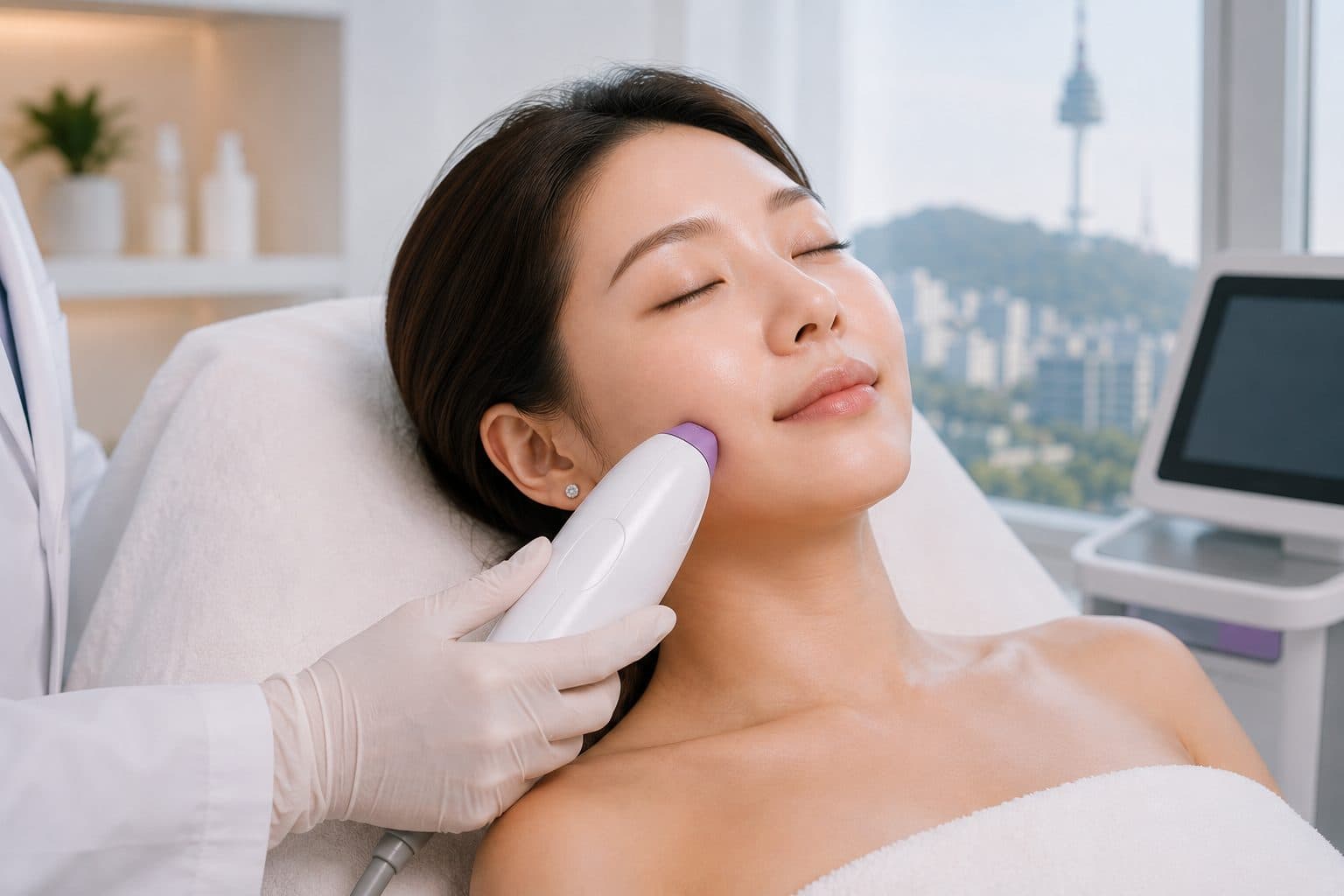
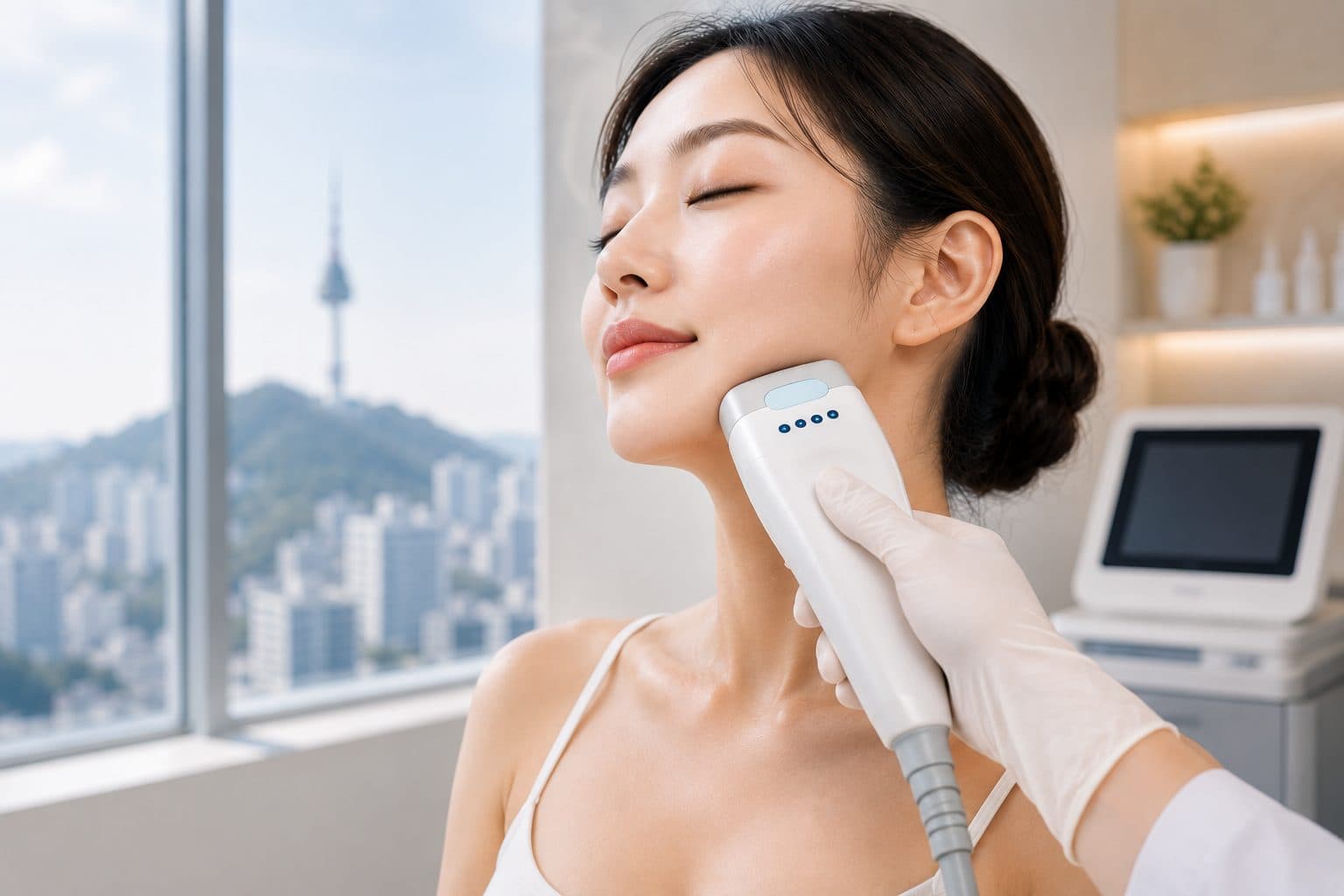
HIFU / Ultherapy | Focused ultrasound energy at selected tissue depths | Which device, treatment depth and anatomical concern are being targeted? |
Thermage / RF | Radiofrequency heating for selected skin-firmness concerns | Which device/tip, area and expected degree of tightening are being discussed? |
If you are not ready to consider surgery, compare the Thread Lift at UPIC Clinic and Skin Tightening at Lienjang Clinic as separate non-surgical options. They should not be presented as identical substitutes for rhytidectomy.
How Fornur Can Help You Compare Facelift Options
Fornur helps foreigners explore medical and beauty services in Korea, review clinic-provided treatment information and request consultations with available clinic partners.
Current surgical facelift availability should be confirmed through the consultation process. The clinic must still confirm the surgeon, exact operation, facility, anaesthesia, total price and aftercare plan.
When you enquire, include the area you want assessed, previous facial procedures, relevant medical history, preferred dates and departure date. The consultation request through Fornur can be free; surgery and related services are paid separately unless the clinic confirms otherwise in writing.
Ready to Compare the Surgical Plan — Not Just the Package Name? Ask for the exact facelift method, surgeon, treatment areas, itemised price, recovery schedule and follow-up before you commit to travel or a deposit. |
Conclusion
The search “Korean face lift” covers several different surgical plans. Mini facelift, SMAS, deep-plane, traditional facelift and neck lift should not be compared as simple package names.
Start with the anatomy and the correction being proposed. Then compare the surgeon, technique, treatment areas, anaesthesia, facility, recovery, risks, follow-up and complete itemised cost.
For an international patient, the plan also needs enough time in Korea for early recovery and postoperative review. Explore Fornur’s Beauty & Medical services or request a free consultation before committing to surgery or travel.
Medical note: This guide provides general educational information. It does not diagnose facial ageing, choose a surgical technique, recommend a clinic or surgeon, or replace an individual consultation with an appropriately qualified healthcare professional.
How This Guide Was Prepared
This guide is designed to help foreign residents and visitors understand common questions before making a decision. Details should always be confirmed directly with the relevant provider or an appropriately qualified professional.
- Author
- Mustafa
- Last reviewed
- October 7, 2026