

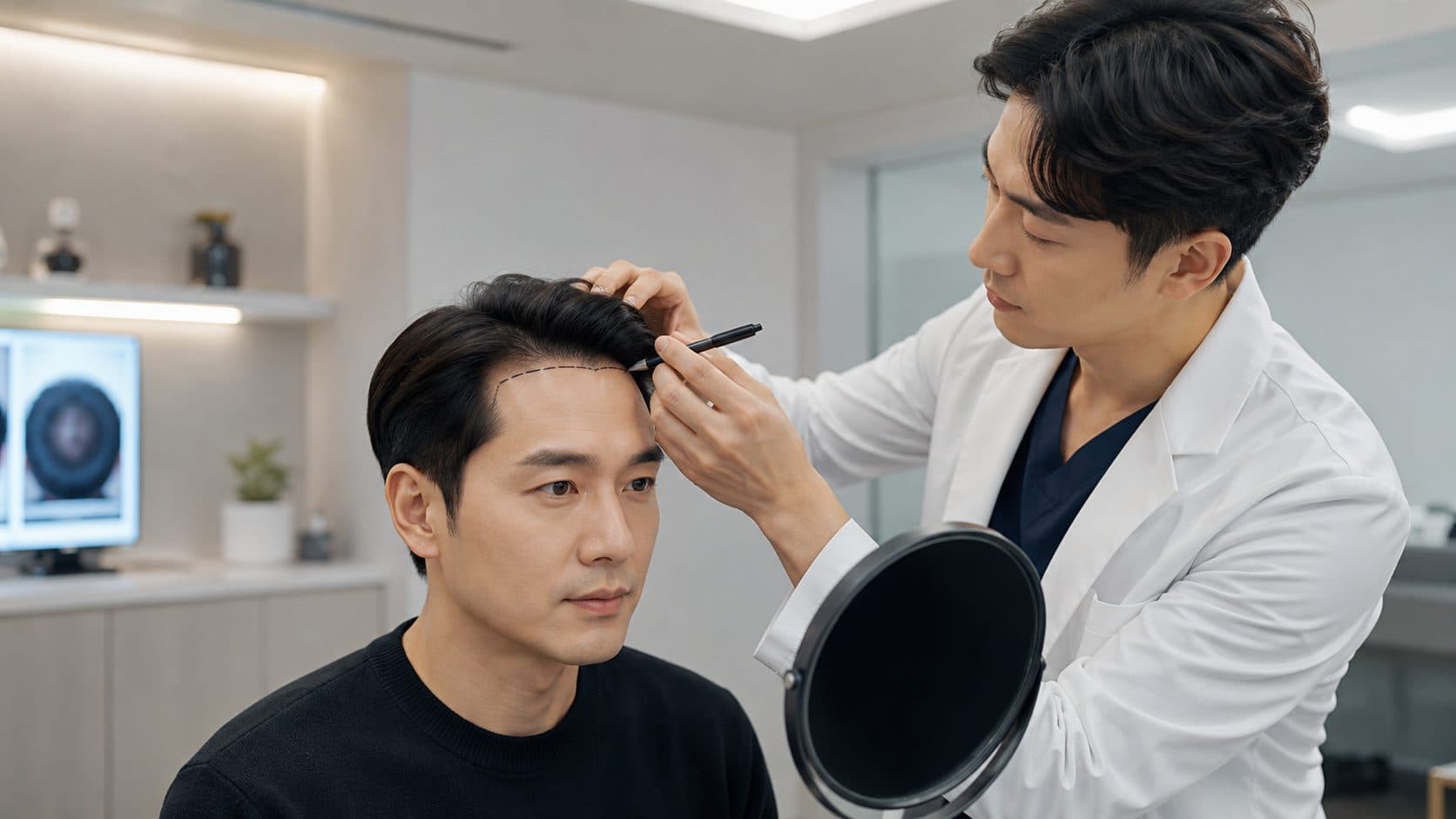
Korean hair surgery can look simple online: choose a graft number, book a clinic, and arrive in Seoul.
The real decision is more complicated.
Hair loss must be stable enough for surgery, and the donor area must support the planned transplant.
FUE and FUT also create different donor-site scars and recovery considerations.
This guide helps you compare the surgical plan before comparing a promotional graft price.
Not sure whether surgery is the right starting point? Medical hair-loss assessment should come before transplant planning when the cause or stability of hair loss is unclear. |
Quick Answer
Hair transplant surgery moves healthy follicles from a donor area into thinning or bald areas.
The two main harvesting methods are FUE and FUT.
Neither method is universally better.
Before booking, confirm diagnosis, donor supply, graft plan, surgeon, technique, price, recovery and long-term hair-loss management.
Key Takeaways
A hair transplant redistributes existing follicles. It does not create unlimited new donor hair.
FUE removes follicular units individually. FUT removes a strip that is divided into follicular grafts.
Donor density and future hair loss matter as much as the advertised graft number.
A lower graft price does not show surgeon involvement, graft handling, facility standards or aftercare.
Transplanted hairs can shed before regrowth begins.
Medical treatment may still be needed because non-transplanted hair can continue thinning.
Korean Hair Surgery: Who Is Actually a Good Candidate?
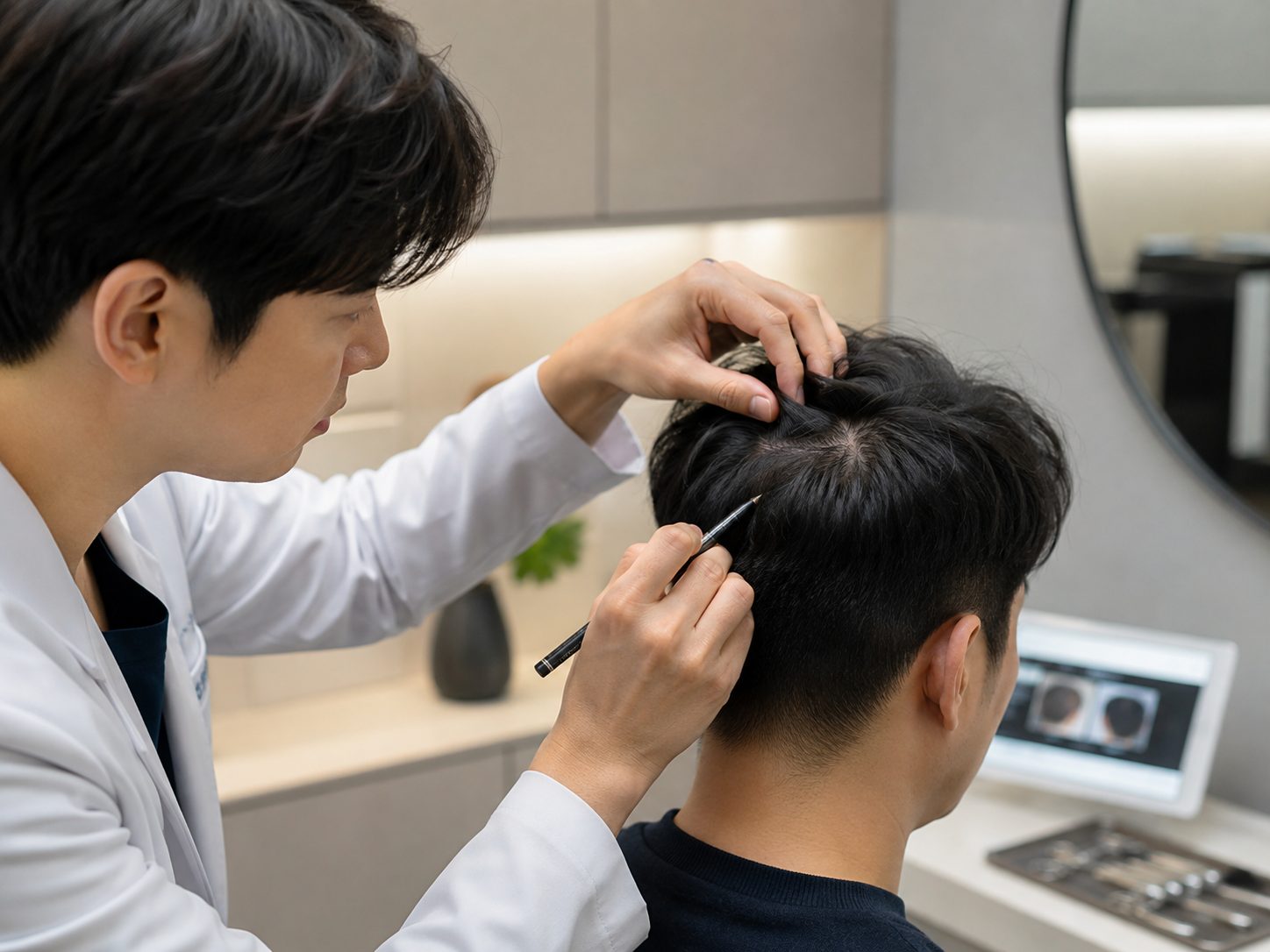
A hair transplant works best when enough healthy donor hair is available.
The thinning area must also be able to support transplanted follicles.
The American Academy of Dermatology recommends a scalp assessment before deciding whether transplantation is suitable.
Some patients also need blood tests or a scalp biopsy before surgery.
That matters when the cause of hair loss is uncertain.
A 2025 review also emphasised candidacy, medical optimisation and postoperative management.
2025 review of hair-transplant candidacy and surgical considerations
FUE vs FUT: What Is the Difference?
Modern hair transplantation mainly uses follicular unit excision or strip-based follicular unit transplantation.
Both can produce natural results when the indication and execution are appropriate.
2025 state-of-the-art review of hair transplantation
Question | FUE | FUT |
How follicles are harvested | Individual follicular units are removed from the donor area. | A strip of donor scalp is removed and divided into grafts. |
Donor scar | Many small circular extraction scars. | A linear donor scar. |
Hair length | Often suits patients who prefer shorter hairstyles. | The linear scar is usually hidden by surrounding hair. |
Main planning issue | Avoid excessive donor depletion. | Plan strip width, closure and future donor use. |
A 2024 comparison found differences in harvested follicular-unit characteristics.
The authors still concluded that one method could not be declared universally superior.
2024 FUE versus FUT donor-harvesting study
Do Graft Numbers Tell You Enough?
Graft count matters, but it is not a quality score.
One follicular unit can contain more than one hair.
Hair calibre, donor density, recipient area and hairline design also affect visual density.
Ask how the clinic calculated the proposed number.
Then ask how much donor reserve should remain for future hair loss.
Hairline Design: The Part You Keep Seeing
A transplant can grow, but a poorly designed hairline can still look unnatural.
Age, facial proportions, recession pattern and likely future loss should influence the design.
Very low or very dense hairlines can consume donor grafts quickly.
Ask to review patients with similar starting patterns, not only the most dramatic transformations.
Korean Hair Surgery Cost: What Changes the Quote?
There is no reliable national transplant price.
Korean clinics can quote by graft, hair, procedure, session or package.
That makes headline prices difficult to compare.
Cost factor | What to confirm |
Technique | FUE, FUT or another defined surgical approach. |
Graft count | Estimated follicular units and how the number was calculated. |
Surgeon role | Who designs the hairline, harvests grafts and creates recipient sites. |
Team role | Which steps involve assistants or technicians. |
Anaesthesia | Type of local anaesthesia or sedation and included fees. |
Aftercare | Washing, medicines, review visits and complication support. |
The lower-difficulty cost queries in your research make this section especially important.
Ask for an itemised total rather than comparing one graft-rate number.
Comparing transplant quotes? Request the technique, graft estimate, surgeon role, facility, anaesthesia, aftercare and complete written price. |
What Should Happen During a Hair-Transplant Consultation?
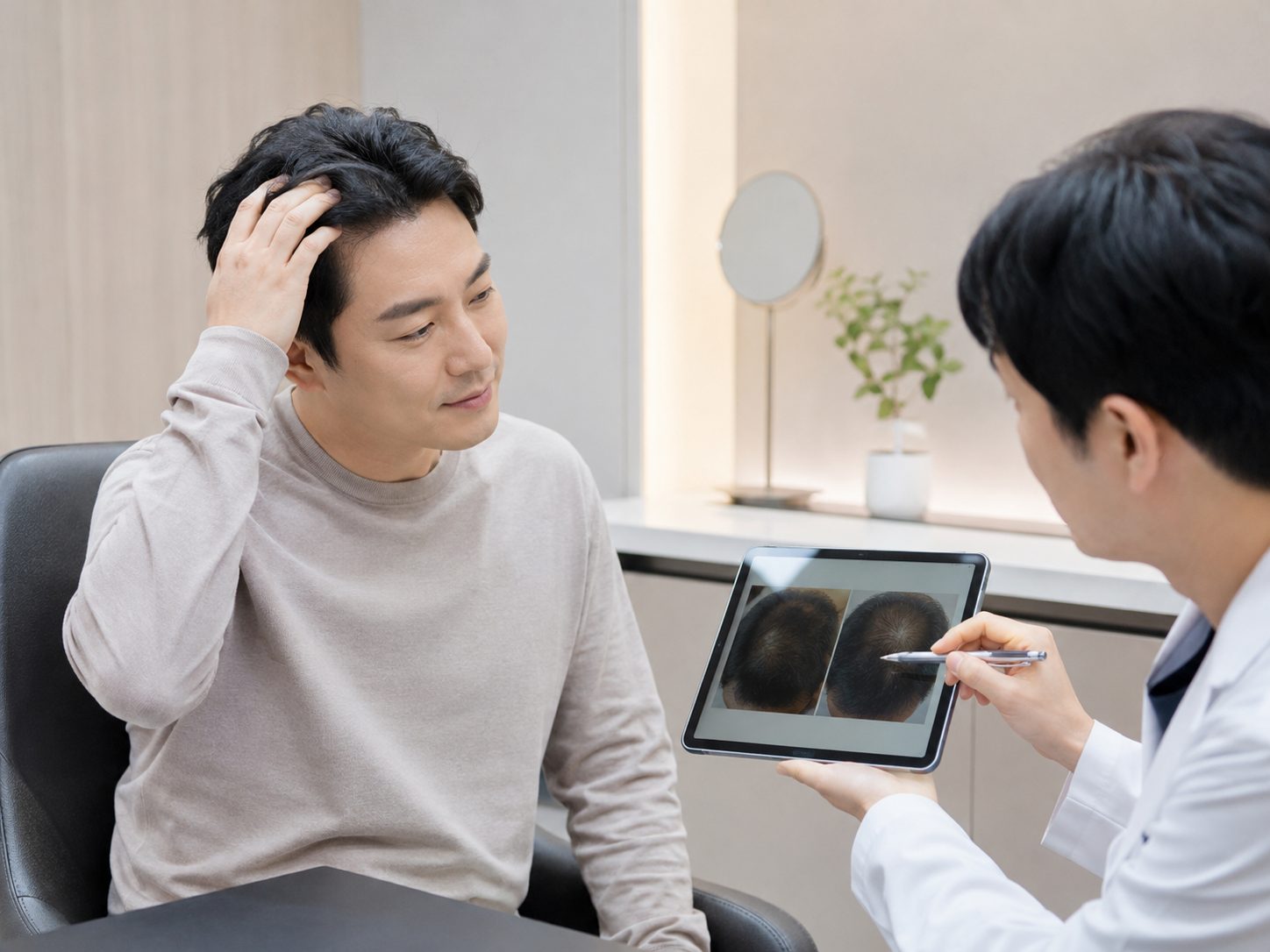
A proper consultation should review the cause and progression of hair loss.
It should also assess donor density, recipient areas, medical history and previous treatment.
ASPS hair-transplant consultation guidance
Why am I a suitable transplant candidate now?
What happens if my existing hair continues thinning?
Why are you recommending FUE or FUT?
How many grafts are planned, and how was that estimate made?
Who performs each surgical step?
What donor density should remain after surgery?
How will complications or poor growth be managed?
What follow-up is needed after I leave Korea?
ASPS also provides a detailed hair-transplant question checklist.
Recovery: What Happens After the Grafts Are Placed?
Hair transplant recovery includes both the donor and recipient areas.
Swelling, tenderness, crusting and temporary redness can occur.
Follow the clinic's washing and activity instructions carefully.
AAD notes that transplanted hairs commonly shed two to eight weeks after surgery.
Visible growth often appears later, with many patients seeing results around six to nine months.
Some patients need up to twelve months.
AAD hair-transplant recovery and growth timeline
Risks and Long-Term Planning
Hair transplantation is surgery and can cause complications.
Risks include infection, bleeding, scarring, graft failure, folliculitis and unwanted cosmetic results.
ASPS hair-transplant risks and safety
A 2025 systematic review examined 45 reports and studies on transplant complications.
Pain, swelling and donor-site problems were among the most reported issues.
2025 systematic review and meta-analysis of hair-transplant complications
Future hair loss is another long-term issue.
Transplanted follicles can remain while nearby natural hair continues thinning.
That is why medical hair-loss management may still be recommended after surgery.
Hair Transplant vs Forehead Reduction
Some searches combine hair transplantation with forehead reduction.
They are different surgical approaches.
A transplant adds follicles along a designed hairline.
Forehead-reduction surgery changes the hairline position through scalp surgery.
Do not treat them as interchangeable packages without a surgical assessment.
Planning Hair Transplant Surgery in Korea
A transplant trip needs more than one free afternoon in Seoul.
Ask when the first wash, donor review and recipient review should occur.
Leave enough time for swelling and early wound care before travelling.
Keep the procedure, graft number, medicines and postoperative instructions in writing.
Medical Korea maintains a directory of institutions registered to serve foreign patients.
Registration helps verification, but it does not guarantee surgical results.
Medical Korea Registered Hospitals directory
How Fornur Can Help
Fornur currently has a Hair Loss Treatment category and non-surgical hair-loss listing.
A dedicated hair-transplant listing was not verified when this guide was prepared.
Current transplant availability should therefore be confirmed through consultation.
If surgery is not yet appropriate, the existing hair-loss pathway can support cause-first assessment.
Explore Hair Loss Treatment in Korea for current non-surgical options.
Considering a transplant in Korea? Share your hair-loss pattern, previous treatment, travel dates and transplant goals. Ask whether a surgical partner is currently available. |
Conclusion
Korean hair surgery should be compared as a long-term surgical plan, not a graft-price promotion.
Start with diagnosis, donor supply, hairline design and future hair-loss risk.
Then compare FUE or FUT, surgeon involvement, graft handling, recovery and complete cost.
The strongest plan protects today's result without exhausting tomorrow's donor options.
Explore Fornur Hair Loss Treatment services or request a free consultation to ask about current transplant availability.
Medical note: This guide is educational. It does not diagnose hair loss, select surgery, estimate grafts or replace clinical assessment.
How This Guide Was Prepared
This guide is designed to help foreign residents and visitors understand common questions before making a decision. Details should always be confirmed directly with the relevant provider or an appropriately qualified professional.
- Author
- Mustafa
- Last reviewed
- October 24, 2026