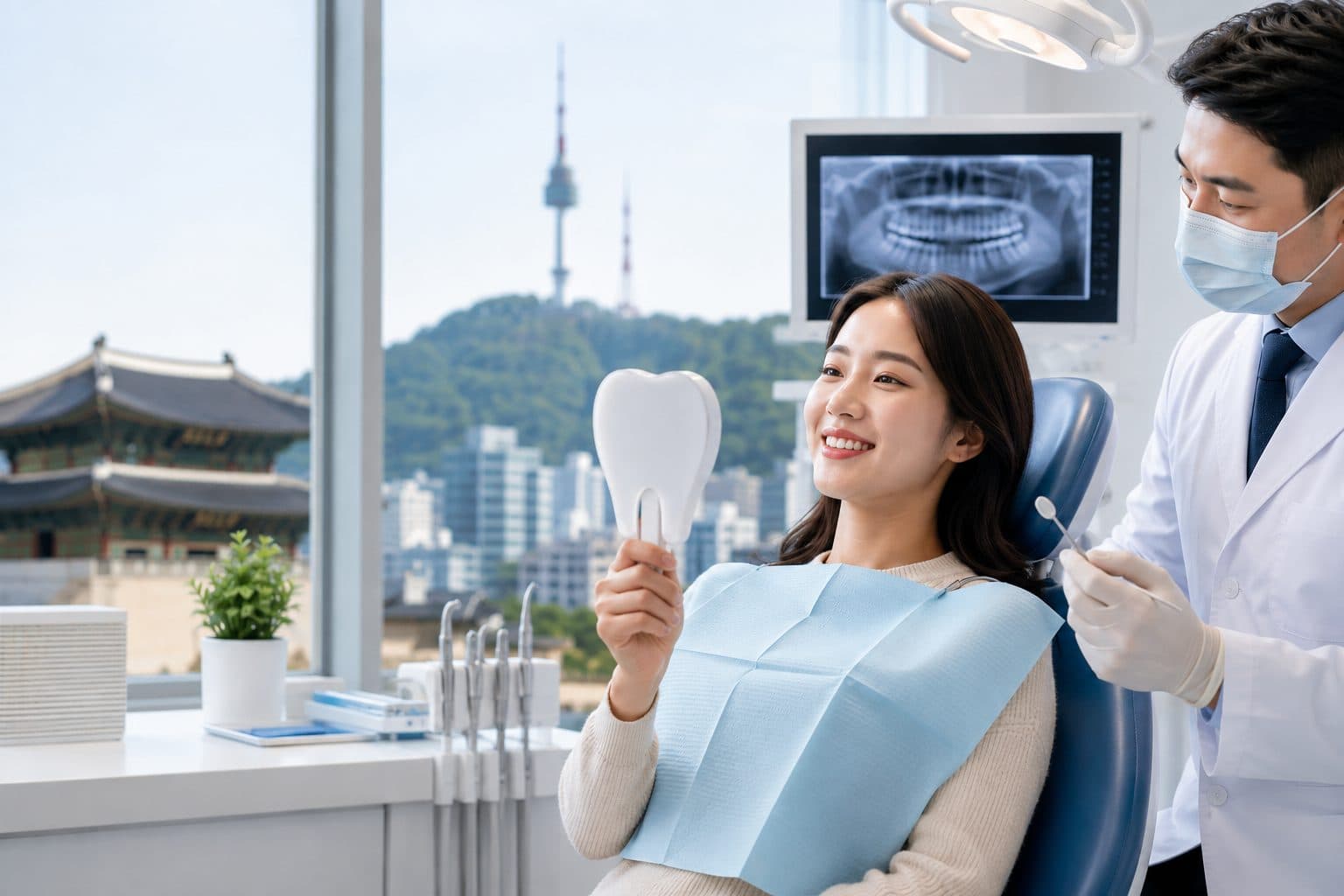


Korean veneers can change a smile quickly, but the most important decision happens before any ceramic is bonded.
For a visitor to Seoul, polished before-and-after photos can make every veneer package look similar.
They are not.
Material, tooth preparation, bite, gum health, and follow-up can all change the treatment.
This guide helps international patients compare the dental plan, not just the veneer count or package price.
Considering veneers during a Korea trip? Explore the wider dental pathway before deciding on a cosmetic restoration. |

Quick Answer
Veneers are thin restorations placed over the visible front surface of selected teeth.
They can change colour, shape, proportion, and selected small spacing concerns.
Treatment becomes irreversible when natural enamel is removed.
Before booking, confirm oral health, material, preparation, dentist, laboratory process, total cost, and follow-up.
Key Takeaways
Veneers change visible tooth surfaces. They do not move teeth like orthodontics.
Ceramic and composite veneers are different treatments.
“No-prep” is not automatically better for every patient.
Preserving enamel matters because bonding generally performs better when more enamel remains.
International patients should know what happens if a veneer chips after leaving Korea.
Korean Veneers: What Are You Actually Getting?
Korean veneers are thin restorations bonded to the visible front of selected teeth.
They are usually made from ceramic or composite resin.
A veneer can change colour, contour, length, and apparent symmetry.
It may also close selected small gaps or mask limited surface defects.
A veneer does not replace every cosmetic dental option.
Crowns cover more of a prepared tooth and can serve a stronger restorative role.
The dentist should explain why a veneer suits your concern before permanent preparation starts.
Source: ADA MouthHealthy — Veneers
Before Veneers: Is the Tooth Healthy Enough?
A cosmetic plan still starts with a dental examination.
The dentist should check for decay, gum inflammation, cracks, sensitivity, existing restorations, and bite problems.
Untreated disease should not be hidden behind a new cosmetic surface.
The American Dental Association also warns against veneer treatment performed without a licensed dentist.
The clinic may require imaging, photographs, scans, or bite records before treatment.
Source: American Dental Association — Statement on “veneer technicians”
Porcelain vs Composite Veneers
“Veneer” describes the restoration, not one single material.
The material affects preparation, appearance, repair options, laboratory work, and cost.
Question | Ceramic / porcelain veneer | Composite veneer |
How it is made | Fabricated from dental ceramic and bonded to the tooth. | Composite resin is bonded and shaped on the tooth. |
Laboratory work | Often involves laboratory or digital fabrication. | May be completed directly in selected cases. |
Preparation | Ranges from minimal to conventional preparation. | Depends on tooth position and treatment goals. |
Repair | Depends on the ceramic and type of damage. | Small defects may sometimes be repaired directly. |
Ask | Exact ceramic, thickness, preparation, and bonding plan. | Composite system, finishing, staining, and maintenance plan. |
A 2025 systematic review compared survival and complications across several ceramic veneer types.
Ask for the exact material name and why it fits your teeth.
Evidence: 2025 systematic review and meta-analysis of ceramic veneer materials
How Much Tooth Preparation Is Needed?
Tooth preparation is one of the most important parts of veneer planning.
Once healthy enamel is removed, it does not grow back.
Preparation depends on tooth position, colour, shape, material thickness, and the intended contour.
Some cases need little preparation, while others need more space for the restoration.
A recent systematic review found better survival when ceramic veneers were bonded mainly to enamel.
More exposed dentin or existing composite restorations can make bonding more complex.
That does not mean every patient should receive a no-prep veneer.
The design still depends on the starting tooth position and final contour.
Evidence: Systematic review of ceramic veneers bonded to different tooth substrates
Korean Veneers and No-Prep Marketing: What to Ask
Korean veneers are sometimes promoted with “no-prep” or “minimal-prep” language.
Treat that as a planning question, not a quality guarantee.
Ask whether your teeth have enough space for added ceramic without unwanted bulk.
Also ask which surfaces will change and how much enamel the dentist expects to preserve.
A 2025 review found encouraging no-prep outcomes in carefully selected cases, with a limited evidence base.
Evidence: 2025 systematic review of no-prep and conventional veneers
How Many Veneers Do You Actually Need?
The number of veneers should follow the smile plan, not a package size.
The dentist should assess tooth proportions, midline, bite, gum levels, and neighbouring teeth.
Ask why each proposed tooth needs treatment.
Whitening may need to happen before the final veneer shade is chosen.
Korean Veneers Cost: What Changes the Quote?
There is no reliable Korea-wide price for Korean veneers.
Clinics can quote per tooth, by material, or as part of a cosmetic package.
Cost factor | What to confirm |
Examination | Whether assessment and imaging are included. |
Material | Exact ceramic or composite system. |
Tooth count | Why each tooth is included. |
Preparation | Whether enamel reduction is expected. |
Scan or impression | Whether records are included. |
Temporaries | Whether temporary veneers are needed. |
Laboratory | In-house or external, plus included adjustments. |
Extra treatment | Whitening, fillings, gum care, or other dental work. |
Follow-up | Included checks and adjustment policy. |
Repair | Policy for chipping, fracture, or debonding. |
Ask for an itemised written quotation before comparing clinics.
A low per-tooth figure may exclude important parts of treatment.
Want a quote you can compare? Ask for the material, preparation, temporaries, laboratory work, follow-up, and complete written price. |
How Long Do Veneers Last?
Veneers are not permanent, maintenance-free restorations.
Longevity depends on material, bonding, tooth structure, bite forces, oral hygiene, and habits.
Fracture, chipping, debonding, marginal changes, and decay can still occur.
Ask how future repair or replacement would be handled.
Risks and Trade-Offs
Possible problems include sensitivity, gum irritation, bite discomfort, colour mismatch, chipping, fracture, or debonding.
Decay can still develop around or beneath a restoration.
Poorly planned contours can make cleaning more difficult around the gumline.
A 2024 systematic review examined how preparation and cementation choices can affect periodontal health.
The goal is a conservative plan with risks you understand and can manage.
Evidence: 2024 systematic review on veneer preparation, cementation and periodontal health
What Should Happen During a Veneer Consultation?
A useful consultation should explain both the cosmetic goal and the biological cost.
You should understand what will happen to every tooth before preparation starts.
Why veneers instead of whitening, bonding, orthodontics, or no treatment?
Which teeth need veneers, and why?
What exact material will be used?
How much enamel will be removed?
Who designs and places the veneers?
Is the laboratory in-house or external?
Will I need temporary veneers?
How will my bite be checked?
What happens if a veneer chips after I leave Korea?
Planning Veneers in Korea as an International Patient
A veneer trip should follow the dental workflow, not only your flight dates.
Ask for a visit-by-visit schedule before booking travel.
Lienjang Dental Clinic currently promotes digital scanning, visual planning, and an in-house dental laboratory for veneer treatment.
Those tools support planning, but they do not guarantee a specific result or timeline.
Leave time after final placement for bite checks and adjustments.
Request copies of scans, X-rays, material details, treatment notes, and final photographs.
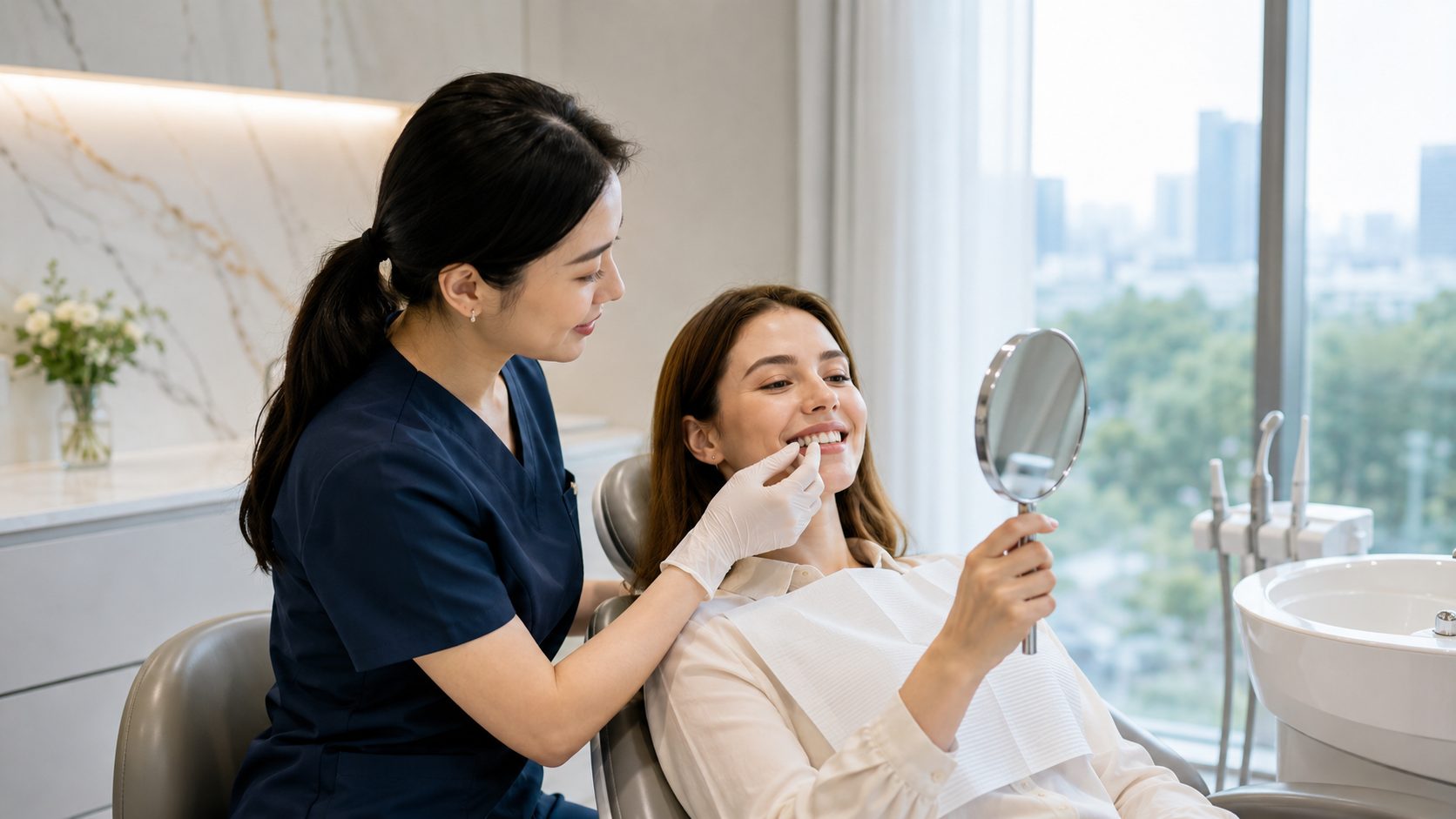
How Fornur Can Help
Fornur helps international patients explore dental treatments in Korea and request consultations with available clinic partners.
For clinic-specific treatment, review Porcelain Veneers at Lienjang Dental Clinic.
Compare Ceramic Crowns at Lienjang Dental Clinic when broader structural coverage may be needed.
The dentist must confirm which treatment is appropriate after examination.
The consultation enquiry through Fornur can be free.
Veneers, examinations, imaging, laboratory work, and dental treatment are not free unless confirmed otherwise.
Explore: Porcelain Veneers at Lienjang Dental Clinic
Compare: Ceramic Crowns at Lienjang Dental Clinic
Related guide: Dental Treatment in Korea for Foreigners
Planning veneers in Korea? Share your goals, travel dates, dental records, and preferred appointment window. |
Conclusion
Korean veneers should be compared as a dental treatment plan, not a package of identical white teeth.
Start with oral health, tooth position, enamel preservation, material, and bite.
Then compare preparation, laboratory workflow, complete cost, follow-up, and future repair planning.
For international patients, good records and enough time for adjustment matter as much as the cosmetic design.
Explore Fornur Dental Treatments or request a free consultation to compare current veneer options.
Medical note: This guide is educational and does not diagnose dental conditions or replace a dentist’s clinical assessment.
How This Guide Was Prepared
This guide is designed to help foreign residents and visitors understand common questions before making a decision. Details should always be confirmed directly with the relevant provider or an appropriately qualified professional.
- Author
- Mustafa
- Last reviewed
- October 24, 2026