
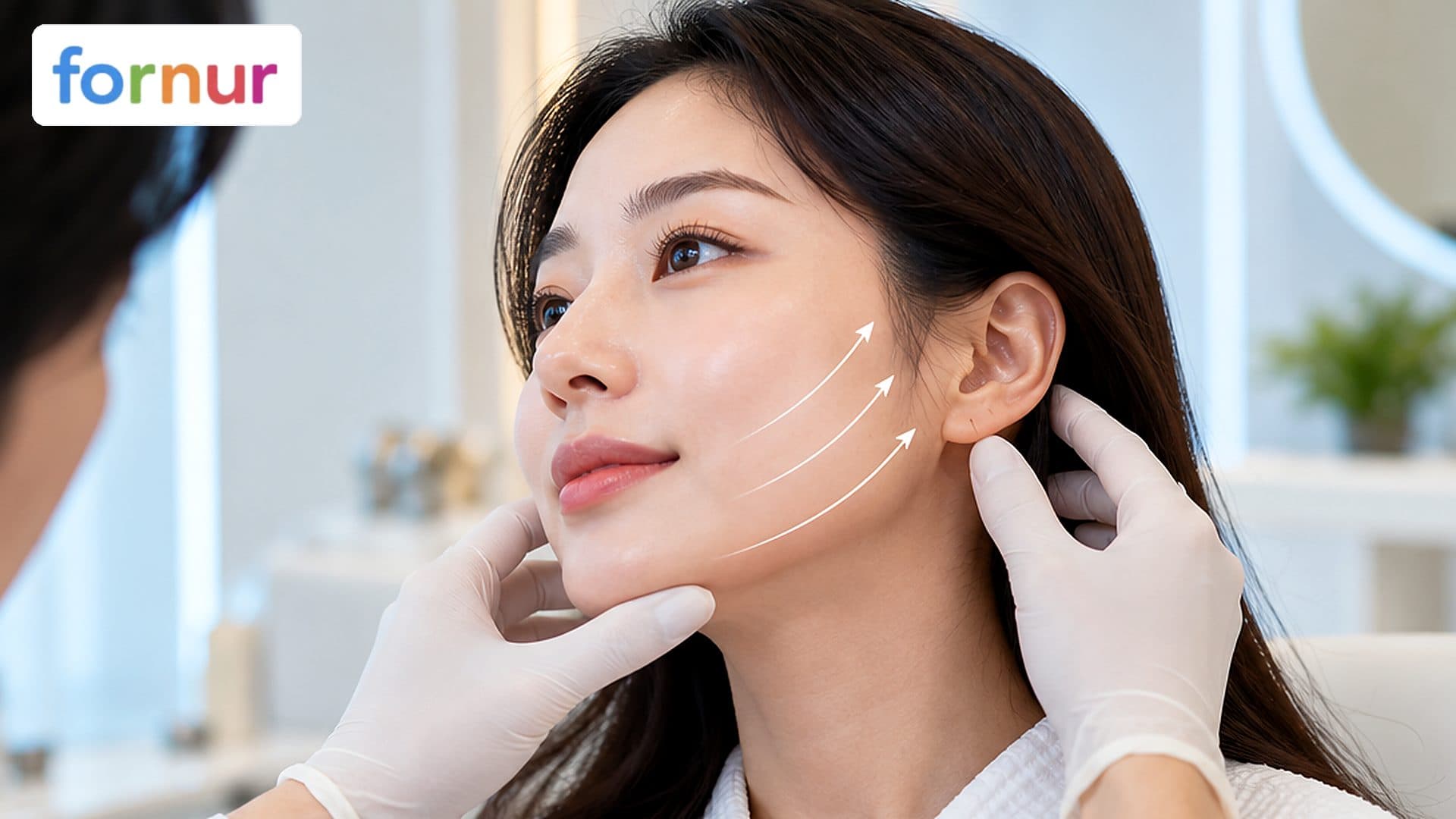
Wondering what your face may look like one day, one week or one month after a thread lift?
Swelling, tenderness and bruising can affect the cheeks or jawline. Recovery also depends on the threads used and their placement.
If you are planning treatment in Seoul, recovery time matters as much as the procedure itself.
This thread lift recovery day-by-day guide explains typical changes, safer aftercare and when to seek medical advice.
It is a general guide, not a fixed schedule for every patient. Your treating clinician's instructions always come first.
 How Long Is Thread Lift Recovery?
Many people can resume desk work soon after a thread lift. However, looking presentable and being fully healed are different milestones.
ASPS recovery guidance describes swelling, bruising and discomfort. Its results guidance says many patients look presentable in three to five days, while healing can take several weeks.
Cleveland Clinic describes swelling or bruising for up to about five days in some patients. It also advises following individual restrictions on strenuous activity.
These are broad ranges, not promises. Greater swelling, persistent discomfort or delayed healing needs advice from your treating clinician.
Quick Recovery Overview
First 24 hours: Tenderness, tightness and some swelling can begin after the procedure.
Days 2–3: Swelling and bruising may be noticeable; early asymmetry may reflect swelling.
Days 4–7: Bruising and puffiness may start settling for some patients. Others need more time.
Week 2: Visible recovery may continue while comfort and facial movement gradually improve.
Weeks 3–4: Many temporary effects ease further; any persistent dimpling, pain or exposed threads need evaluation.
Following months: The treated area continues changing with healing and natural ageing. The degree and duration of lift vary.
A day number cannot diagnose recovery. Trends, symptoms and clinician assessment matter more than matching a photograph.
Thread Lift Recovery Day by Day
Day 0: Immediately After Treatment
Small entry points may be covered or treated as your clinician instructs. Tenderness, a pulling sensation and mild swelling can occur.
The early contour may look tighter or uneven. Do not judge the final result while the tissues are irritated.
Your practitioner should provide written guidance on wound care, medicines, activity and whom to contact after hours.
Day 1: Tenderness and Early Swelling
Some tightness, facial sensitivity or swelling may still be present. Discomfort can differ between cheeks or treatment areas.
Avoid rubbing or manipulating the treated tissues. Use skincare, medicines or cold compresses only as directed.
Contact the provider if pain becomes severe, swelling increases abruptly or you develop an unexpected new symptom.
Days 2–3: Bruising, Puffiness and Unevenness
Swelling or bruising may be more noticeable during this period. This does not mean every patient follows the same progression.
Temporary differences between sides can also become more apparent. However, significant or worsening asymmetry merits review.
Do not attempt to massage out a dent or adjust a palpable thread yourself. Ask the treating clinician first.
Days 4–5: Early Improvement for Some Patients
Bruising and puffiness may begin improving. ASPS results guidance describes three to five days as a common return-to-public milestone, not complete healing.
Others still have visible swelling or bruising. That alone cannot establish a complication without assessing other symptoms.
If travelling, allow flexibility. A return-to-work estimate is not clearance for strenuous activity or flying after an unexpected reaction.
Days 6–7: Check Your Healing, Not Just Appearance
An improving trend is reassuring, but facial soreness, tightness or bruising may persist beyond the first week.
Follow your clinician's review schedule. Ask before restarting exercise, facial treatments, deep massage or other pressure on the area.
A fresh increase in redness, pain, discharge or swelling should not be dismissed as routine recovery.
Weeks 2–4: Settling and Follow-Up
Tenderness and visible changes can continue easing. Your practitioner may check thread position, entry points and contour.
Cleveland Clinic notes that vigorous exercise may need to be postponed for around two weeks, depending on your surgeon's advice.
Persistent dimpling, exposed threads or ongoing pain need professional assessment. These should not be managed through online aftercare tips.
One Month and Beyond: Results and Longer-Term Changes
The appearance can evolve beyond the first month. Natural ageing continues, and thread lifting does not create a permanent surgical result.
A 2025 systematic review of 12 studies found early improvement after absorbable facial thread lifts, but long-term effectiveness evidence remains limited.
Ask your clinician when to assess the result and whether other options or future treatments might be appropriate.
What Changes Your Thread Lift Recovery Timeline?
Treatment areas, placement, thread type and the amount of manipulation may influence early swelling and tenderness.
Bruising and healing also vary between individuals. Previous facial treatments or other procedures can complicate recovery expectations.
Ask your practitioner what is normal for your specific plan, including when to contact them about unexpected changes.
How to Evaluate Thread Lift Recovery Photos
Genuine, dated photographs can help explain swelling, bruising and contour changes. They cannot predict how your own face will heal.
When viewing a recovery-photo series, check that the images show the same patient and clearly labelled follow-up dates.
Look for consistent angles, lighting and facial expressions. Edited or selectively cropped pictures may make progress look misleading.
Also ask whether the patient had fillers, energy treatments or other procedures during the same period.
Ask whether the photographs show genuine patients with consent, accurate dates and disclosed accompanying treatments.
This guide does not currently include a verified day-by-day patient photo series. Illustrations should never be presented as real patient outcomes.
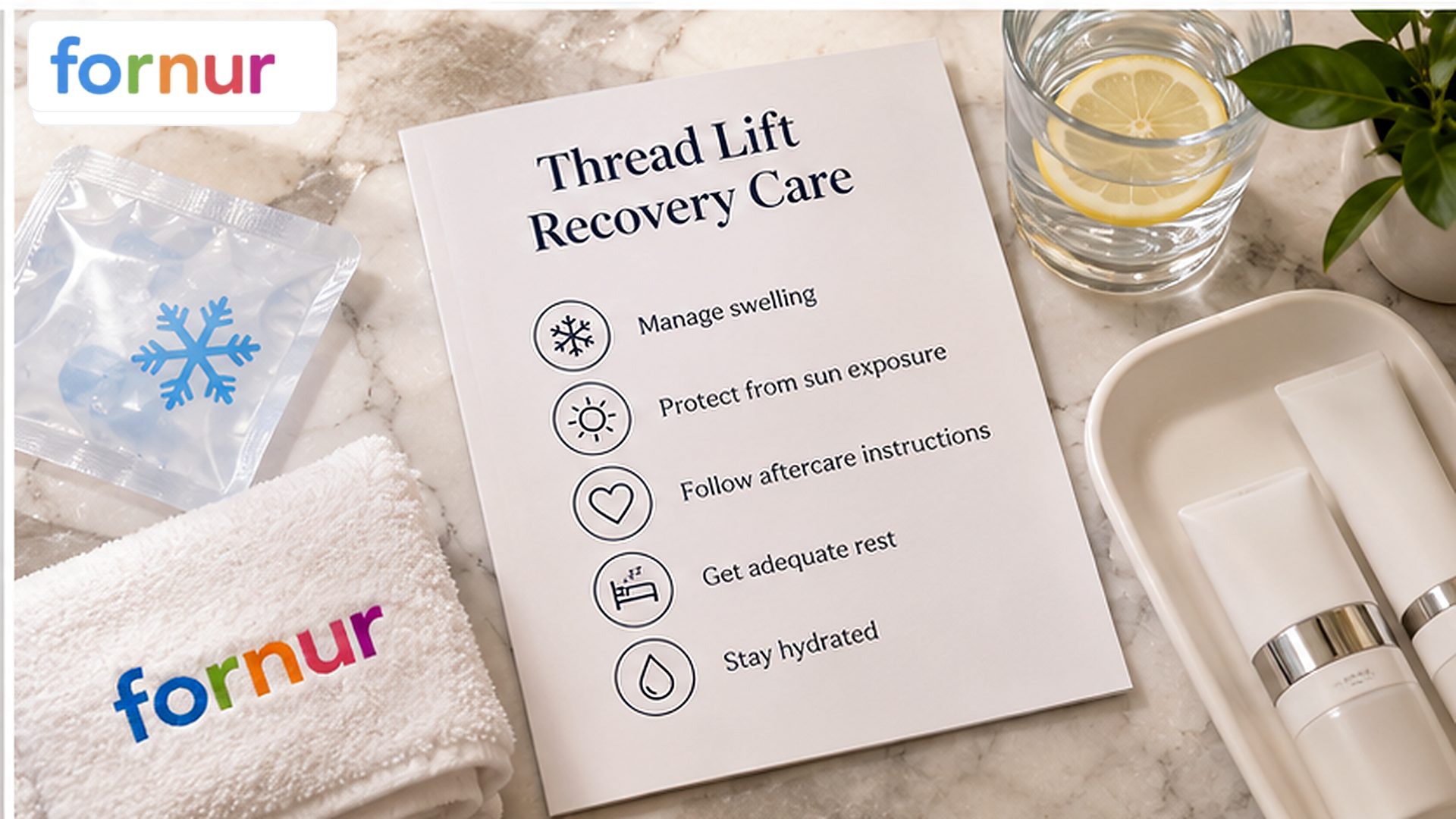
Thread Lift Aftercare: What Helps Protect Healing?
Follow written entry-point and wound-care instructions from your treating clinician.
Avoid pressing, rubbing or deliberately moving the treated area unless the provider instructs otherwise.
Ask before using makeup, active skincare, facial devices or cosmetic treatments near the entry points.
Follow individual advice about sleeping position, exercise and facial movement.
Use prescribed medicines exactly as directed and report possible reactions.
Attend scheduled reviews, especially if you are travelling from outside Korea.
The ASPS recovery guidance emphasises personalised aftercare, treatment-site care and follow-up. It does not recommend one universal routine.
Normal Recovery or Possible Complication?
Mild swelling, bruising and tenderness can occur early. A gradual improvement in symptoms is generally more reassuring than worsening changes.
Call the treating clinician promptly if you notice any of these concerns:
Increasing redness, warmth, tenderness or swelling after initial improvement.
Pus, discharge, fever or other signs of possible infection.
Visible or protruding thread material, persistent skin dimpling or new contour deformity.
Severe pain, significant bleeding, increasing asymmetry or a new problem opening the mouth.
New facial weakness or another sudden neurological symptom. Seek urgent medical assessment.
The ASPS lists infection, persistent pain, thread extrusion, swelling and bruising among recognised thread lift risks.
A 2026 meta-analysis covering 26 studies and 2,827 patients reported swelling, bruising and dimpling as recurring complications.
The researchers found substantial differences between studies. Their pooled figures are not reliable predictions for one patient or one clinic.
A separate 2025 systematic review of 19 studies reported different complication patterns by thread material, design and treatment area.
Avoid diagnosing serious complications from online images. Contact your provider or a local healthcare service.
Considering Thread Lift Treatment in Korea?
If you are considering treatment, compare the procedure, risks and recovery on Fornur's Thread Lift in Korea treatment page.
For general availability questions, message Fornur before travelling. A qualified clinician must confirm suitability and any appointment.
 Thread Lift Recovery vs Ultherapy and Radiofrequency
A thread lift places physical threads beneath the skin. Ultherapy and RF skin-tightening treatments use energy rather than inserted threads.
Different techniques have different recovery profiles and treatment limitations. A lower-downtime advertisement does not establish which option is best.
To understand alternatives, read the Ultherapy in Korea treatment page and RF Lifting & Skin Tightening in Korea.
Thread lifting cannot remove substantial loose skin like an operation designed for surgical lifting. Our Korean Face Lift guide explains that distinction.
A treatment consultation should address the actual cause of laxity, facial volume changes and individual expectations.
How to Plan Recovery if You Are Visiting Seoul
Before making a reservation, confirm the actual procedure, thread type, placement and expected follow-up with a licensed provider.
Allow room in your itinerary for swelling, bruising, review visits and unplanned medical advice.
Ask who can examine you if a problem develops after you leave Korea.
Do not schedule major photography, strenuous activities or another cosmetic treatment immediately after the procedure.
Confirm whether Fornur can currently support your enquiry before planning around a consultation or reservation.
The plan should reflect the treating clinician's assessment rather than an advertised universal downtime.
Ask Fornur About Current Availability
Browse the Skin & Aesthetic treatment category, then message Fornur for current service information and enquiry options.
Do not assume clinic matching, a free medical consultation or a reservation is available until confirmed.
The Bottom Line
Thread lift recovery often involves short-lived swelling, bruising and tenderness. Some people feel presentable quickly, while healing continues over weeks.
Use a recovery timeline to plan—not to diagnose. Increasing symptoms or an unexpected contour change should be assessed by a qualified clinician.
For treatment information, see Fornur's Thread Lift page. To check current service availability, message Fornur before committing to travel or payment.
Medical note: This guide is educational and does not replace individual postoperative instructions. It must be approved by a named qualified clinical reviewer before publishing as medically reviewed.
How This Guide Was Prepared
This guide is designed to help foreign residents and visitors understand common questions before making a decision. Details should always be confirmed directly with the relevant provider or an appropriately qualified professional.
- Author
- Mustafa
- Last reviewed
- October 30, 2026