

You can sleep well and still look tired. Sometimes, the shadow beneath your eyes is caused by a hollow - not tiredness.
But a hollow, an eye bag and a dark patch of pigmentation are different problems. They need different treatment decisions.
Under-eye fat transfer in Korea is one possible option for selected hollows. It is not a universal cure for dark circles.
Before comparing Seoul clinics or prices, work out what is creating the concern. That decision affects safety and results.
This guide explains the procedure, recovery, costs, alternatives and questions worth asking before travelling.
Under-Eye Fat Transfer: The Quick Answer
Under-eye fat transfer, also called under-eye fat grafting, uses fat collected from another body area to add selected facial volume.
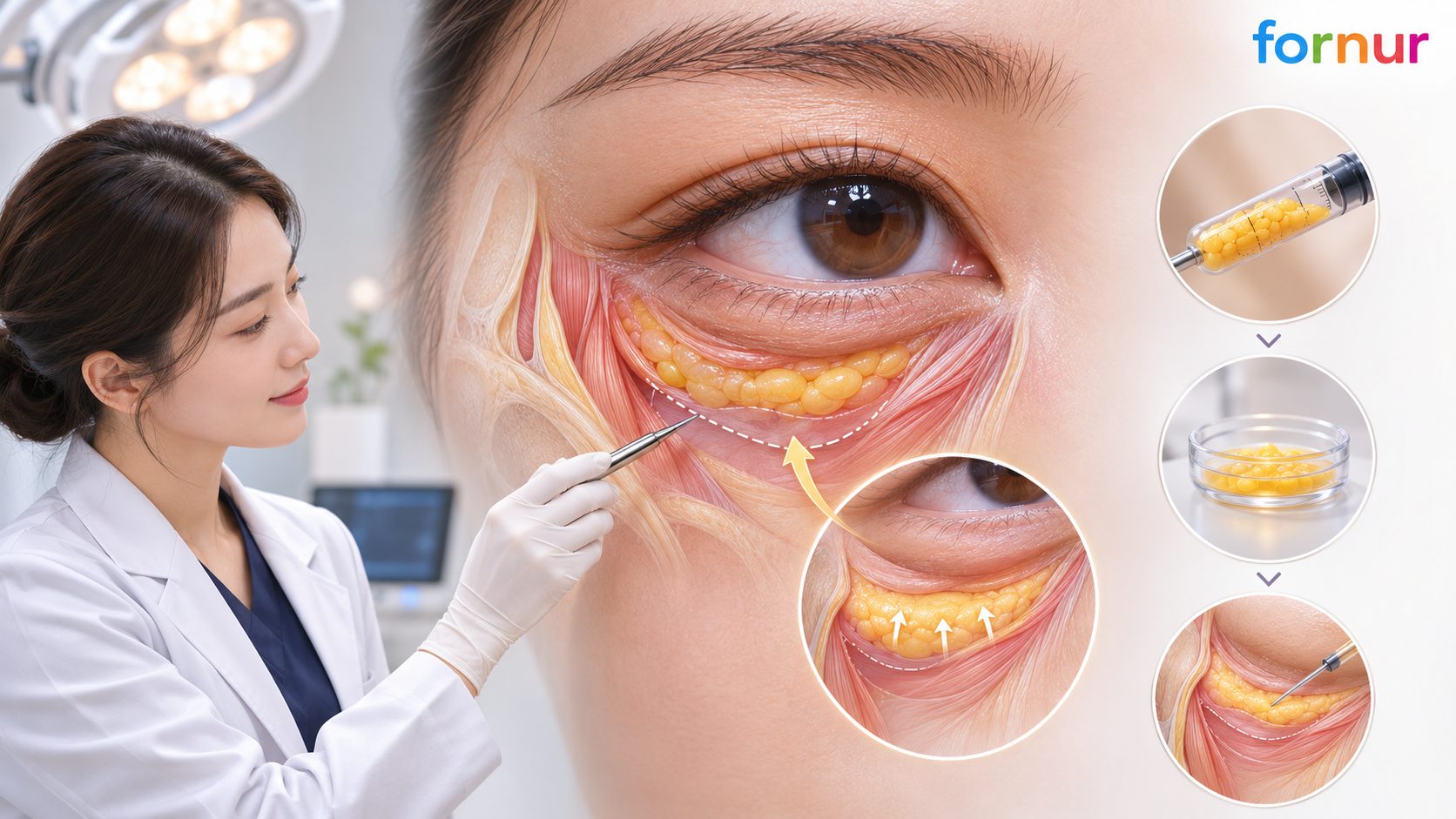
The clinician may place prepared fat around the tear trough or lid–cheek junction after assessing the anatomy.
Unlike lower-eyelid fat repositioning, this technique brings fat from a donor area. It does not simply move existing eye-bag fat.
Graft retention varies. Some transferred fat is reabsorbed, and no specialist can promise a precise long-term volume.
A May 2026 review of tear-trough deformity stresses matching treatment to anatomy, skin quality and eyelid support.
Considering a procedure in Seoul? Review Fornur's Facial Fat Grafting treatment, then message Fornur to check whether under-eye fat transfer enquiries are currently supported.
What Is Causing the Hollow or Darkness Under Your Eyes?
People describe several different conditions as 'dark circles.' The right assessment separates them before discussing surgery.
Under-eye hollow: A volume depression can cast a shadow where the lower eyelid meets the cheek.
Protruding eye bag: Lower-eyelid fat may bulge forward, sometimes with a hollow just beneath it.
Pigmentation: Brown or grey coloration may persist even when volume is restored.
Thin or crepey skin: Fine lines and visible vessels can affect the area without a major volume deficit.
Swelling or medical conditions: Puffiness can have causes unrelated to cosmetic volume loss.
The American Academy of Ophthalmology's reviewed tear-trough resource explains how anatomy shapes these concerns.
A qualified clinician should assess each component. A selfie cannot distinguish fat loss, eye bags and pigmentation reliably.
When Might Under-Eye Fat Grafting Make Sense?
Fat grafting may be discussed when under-eye volume loss contributes to a hollow or sunken lid–cheek junction.
It can also be considered alongside other surgery in selected cases. The entire plan should follow a clinical examination.
It may be less suitable when the main issue is loose eyelid skin, substantial bags or pigmentation without volume loss.
Previous lower-eyelid surgery, fillers, scarring, medical conditions and donor-fat availability can change the decision.
Ask the surgeon to explain why adding fat is preferable to another technique for your particular anatomy.
What Happens During Under-Eye Fat Transfer?
Although described as 'injecting fat,' the process has several surgical stages.
Assessment: The clinician examines under-eye hollows, eyelid support, eye symptoms and the whole lid–cheek area.
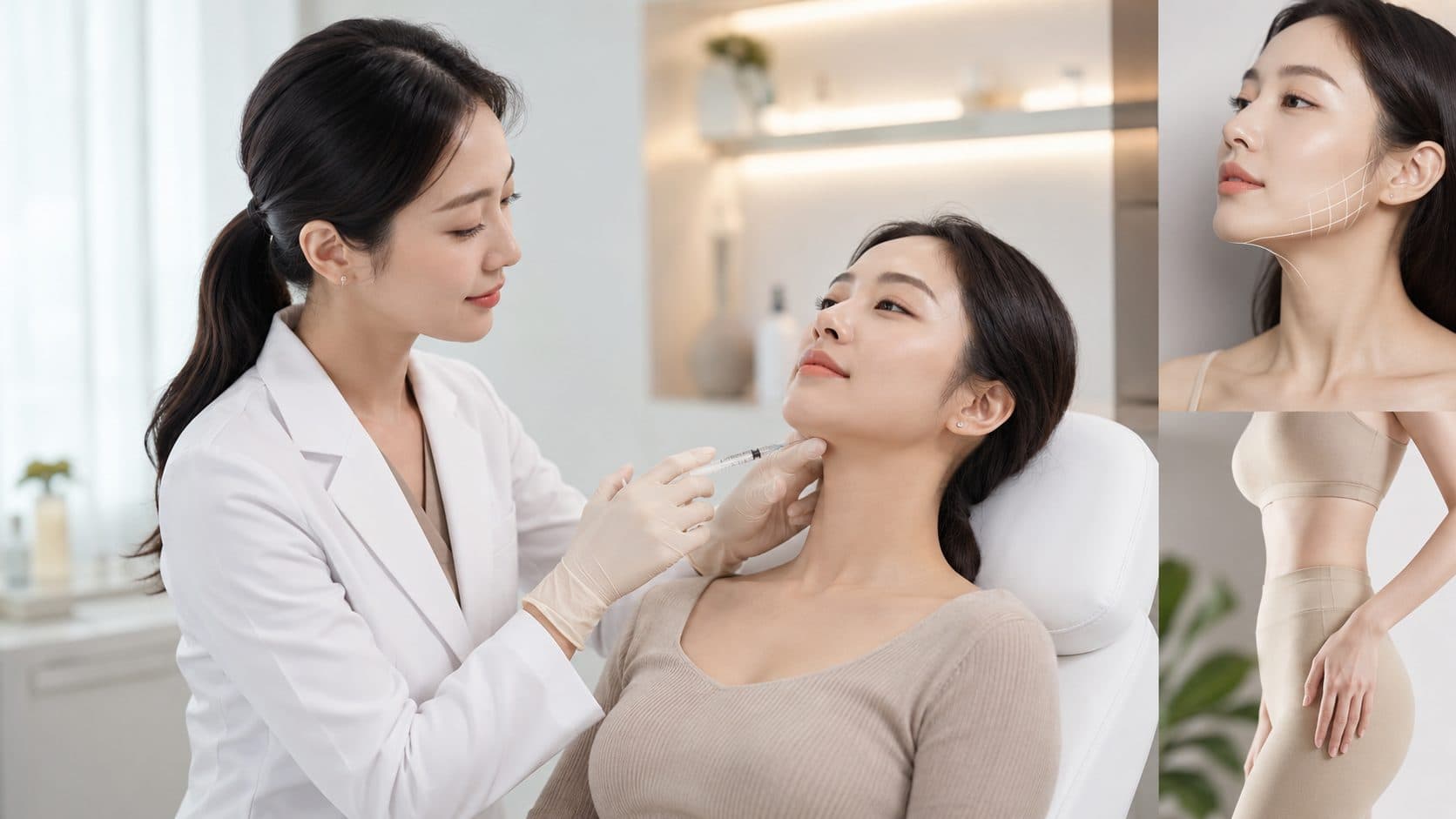
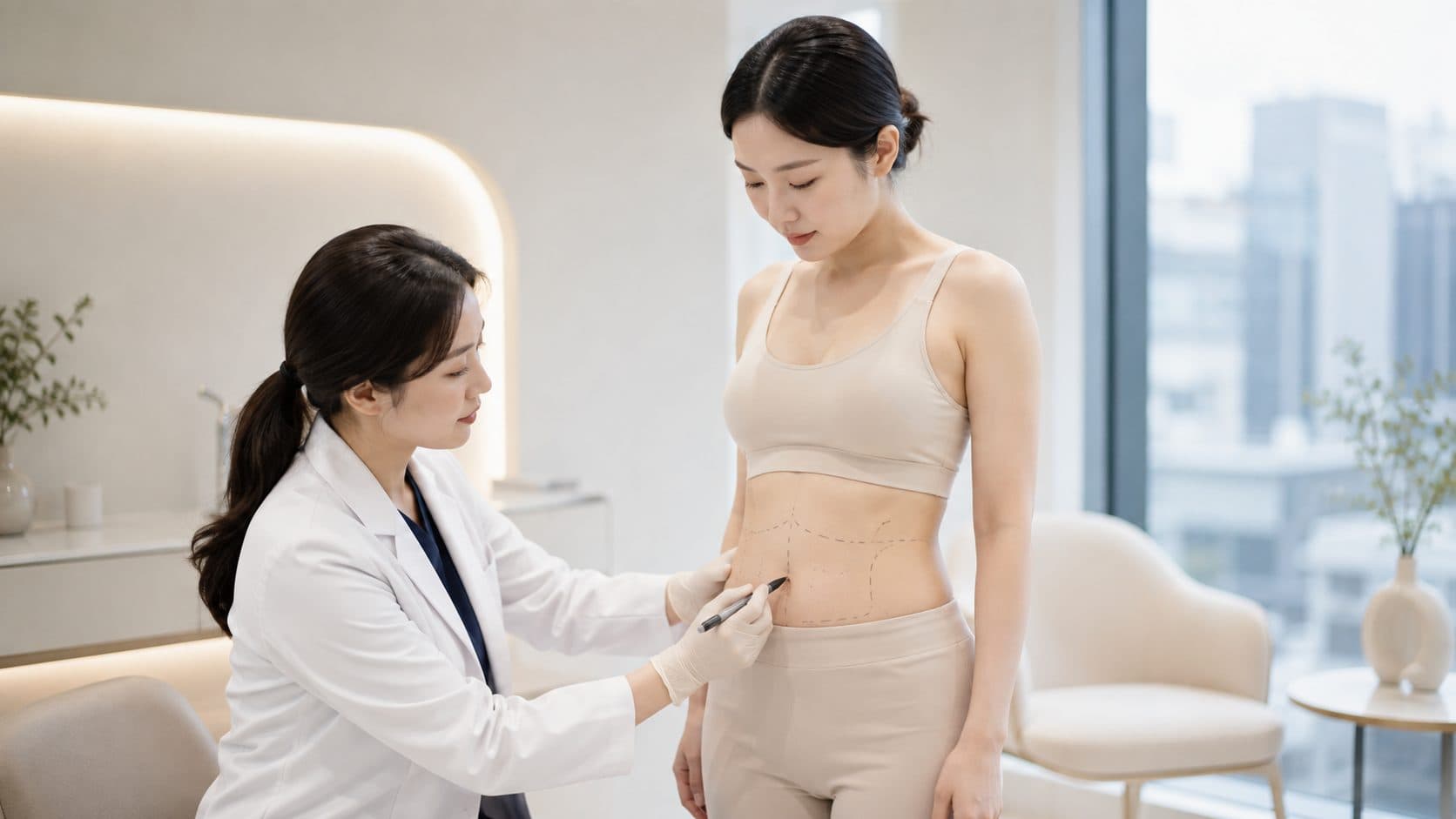
Donor-area selection: A suitable area, often the abdomen or thighs, may provide fat for harvesting.
Fat collection: A small-volume liposuction technique removes donor fat under the planned anaesthetic.
Preparation: The harvested material is processed before precise placement, using the surgeon's chosen method.
Placement: The clinician adds small amounts to selected tissue planes while protecting delicate anatomy.
Review: Aftercare covers both the under-eye area and the donor site, with reassessment after swelling settles.
The American Society of Plastic Surgeons explains donor-area harvesting and subsequent facial fat injection.
Technique, anaesthesia, incision sites and follow-up are not identical across clinics. Obtain the full plan in writing.
Under-Eye Fat Transfer vs Repositioning vs Filler
Three options often appear in the same search results. They are not interchangeable.
Fat Transfer: Adds Volume From Another Body Area
This option uses harvested fat to address selected volume deficits. It requires donor-site care as well as facial recovery.
Fat survival is variable. Uneven volume, lumps or a need for revision can affect satisfaction.
Lower-Eyelid Fat Repositioning: Moves Existing Fat
This technique redistributes fat already present in the lower eyelid, usually as part of lower blepharoplasty.
It may fit some patients with visible eye bags and a neighbouring tear-trough depression.
The NHS describes lower-eyelid surgery as involving fat repositioning or removal, sometimes with skin adjustment.
Fornur's Lower Blepharoplasty treatment page explains that different surgical intent. It is not a second fat-transfer page.
Tear-Trough Dermal Filler: A Different Injectable
Hyaluronic-acid filler is a manufactured injectable product. It does not require liposuction or donor fat.
Fornur's Dermal Fillers treatment page explains this injectable category. Its Lienjang Dermal Fillers listing mentions tear-trough treatment, not surgical fat grafting.
The US FDA advises against injecting dermal fillers around the eyes and lists this as an unapproved use. Korean rules must be checked separately.
Injectable treatments near the eyes carry serious vascular risks. Confirm local rules, the actual product and injector qualifications.
An October 2026 systematic review covered 31 periocular filler and fat-grafting studies involving 2,573 patients.
Its indirect comparison did not establish that either approach was reliably safer. Patient selection remains important.
A More Useful Way to Compare the Options
If the main concern is a hollow, discuss whether adding volume is appropriate.
If the main concern is a protruding bag, ask about lower-eyelid evaluation and fat repositioning.
If the main concern is pigment or skin texture, volume surgery may not address the cause.
If considering any injectable, ask specifically about eye-area vascular safety and emergency procedures.
For a separate look at upper-eyelid surgery, read Fornur's Double Eyelid Surgery guide. Upper crease surgery is not lower-eye fat grafting.
Under-Eye Fat Transfer Recovery: What to Expect
A predictable, photograph-perfect recovery calendar does not exist. Swelling and bruising depend on technique and individual healing.
First few days: Some puffiness, bruising, tightness or tenderness may appear around the eyes and donor area.
First one to two weeks: Visible swelling may improve, but appearance can change from day to day.
Following weeks: Residual swelling and contour changes continue settling; follow-up may clarify early irregularities.
Following months: Graft retention and final volume become easier to assess, although results vary.
These are general stages, not guaranteed milestones. Your surgeon may set different activity or review schedules.
Avoid rubbing or pressing the treated area unless instructed. Ask before exercise, skincare treatments, flying or wearing makeup.
The donor site may have bruising or soreness too. Do not plan travel based only on how the eyes look.

How Long Does Under-Eye Fat Transfer Last?
Some grafted fat may integrate and persist, while some may be absorbed during healing.
The final amount is not predictable from a marketing promise or a single study average.
Changes in weight, ageing, technique and the original problem can influence later appearance.
A repeat procedure is sometimes discussed, but it should never be assumed necessary or risk-free.
The latest October 2026 review identifies important gaps in direct comparative evidence and long-term follow-up.
Ask what the provider will consider an acceptable result and when a genuine assessment is possible.
What Are the Risks of Under-Eye Fat Grafting?
The lower eyelid has thin tissues and complex vascular anatomy. Even small contour changes can be noticeable.
Common early effects can include swelling, bruising and soreness.
Potential complications include asymmetry, over- or under-correction and visible irregularities.
Lumps, fat necrosis or inflammatory nodules can sometimes develop.
Infection, bleeding, donor-area problems and unwanted scarring are also possible.
Rare vascular complications of facial fat injection can threaten vision or cause other serious harm.
A 2024 systematic review assessed complication reports from lower-eyelid fat grafting and repositioning.
The studies combined different procedures, so their pooled results are not your personal risk estimate.
Sudden changes in vision, severe eye pain or neurological symptoms require immediate emergency medical care.
Worsening redness, fever, increasing swelling or unusual discharge require prompt clinical assessment.
Any procedure offered near the eyes should include a clear emergency plan and qualified medical supervision.
Under-Eye Fat Transfer Cost in Korea
How much does under-eye fat transfer cost in Korea? There is no reliable single figure for every patient.
The appropriate price depends on whether fat grafting alone is planned or combined with other procedures.
A complete quote should explain:
Surgeon and anaesthesia fees, plus the facility and level of monitoring.
Donor-area harvesting, fat preparation and under-eye placement.
Consultation, imaging or tests when clinically required.
Medicines, dressings and postoperative reviews.
Possible extra care, revision terms and how complications are handled.
Taxes, deposit policy, cancellation conditions and payment currency.
Travel, accommodation and support if recovery takes longer than expected.
Fornur's Facial Fat Grafting treatment page does not publish a verified under-eye surgery price.
Do not compare a lower-blepharoplasty package or tear-trough filler price with surgical fat-transfer fees.
Our Plastic Surgery Cost guide explains how to compare complete quotations without relying on headline packages.
Ready to compare options? Message Fornur about current under-eye fat-grafting availability. Ask whether a qualified provider can review your concern before discussing a quote.
Choosing a Clinic or Surgeon in Seoul
The operating clinician matters more than a package label. Ask who will assess and perform the actual procedure.
Confirm relevant plastic-surgery or oculoplastic expertise and experience with lower-eyelid anatomy.
Ask whether grafting, repositioning, blepharoplasty or no procedure is recommended—and why.
Request an explanation of the donor site, injection depth, anaesthesia and safety planning.
Ask about the risk of contour irregularity, vision complications and how emergencies are managed.
Request authentic, consented before-and-after cases with comparable anatomy and follow-up timing.
Check who handles follow-up care once you return home.
Get a written itemised quote and understand the revision and refund policies.
Medical Korea maintains an official directory of institutions registered to serve foreign patients.
The directory publishes registered institutions. Registration is not proof of a particular clinician's skills or results.
Do not book international flights around an unconfirmed consultation. Factor in clinical review and postoperative care.
Before-and-After Photos: What to Look For
Genuine patient images can show differences in tear-trough shadows and volume. They cannot guarantee your results.
Compare consistent lighting, camera angle, facial expression and the number of months after treatment.
Check whether the patient also had lower-eyelid surgery, filler or other procedures.
Be wary of 'instant' results photographed during swelling. A single image does not prove durable graft survival.
This guide does not include a verified patient before-and-after series. Illustrations must not be represented as real outcomes.
The Bottom Line
Under-eye fat transfer can be worth discussing when volume loss creates a visible hollow. It is not a treatment for every dark circle.
The safer starting point is a clinical assessment that separates hollows, bags, pigment and skin concerns.
Explore Fornur's Facial Fat Grafting service, Plastic Surgery treatments and Medical Services hub to compare options before enquiring.
For current under-eye fat transfer options, message Fornur. Confirm the provider and follow-up plan before making payments or travel decisions.
Medical note: This article is educational, not personal medical advice. Clinical review is required before publication.
How This Guide Was Prepared
This guide is designed to help foreign residents and visitors understand common questions before making a decision. Details should always be confirmed directly with the relevant provider or an appropriately qualified professional.
- Author
- Mustafa
- Last reviewed
- November 3, 2026