
What Does “Halal” Mean?
Halal (حلال) is an Arabic word meaning “permissible” or “lawful.” In Islam, halal describes things that are allowed according to Islamic principles.
When we talk about halal food, we mean food and drinks that Muslims are permitted to consume.
The opposite of halal is haram (حرام), meaning prohibited or unlawful.
Halal is not limited to meat. Ingredients, drinks, food preparation, processing, storage, and possible contact with prohibited substances can all matter when determining whether a food is halal.
What Foods Are Generally Halal?
Many everyday foods are naturally halal, including fruits, vegetables, rice, grains, beans and lentils. You can also explore halal and international groceries in Korea through Fornur.
Processed foods require more attention because they may contain ingredients derived from animals or alcohol.
What Foods Are Haram?
Some of the best-known prohibited foods and ingredients include:
Pork and pork-derived ingredients
Blood
Alcohol and intoxicants
Animals that have died without proper slaughter
Meat from animals that are not permissible to eat
Permissible animals that were not slaughtered according to applicable Islamic requirements
This is why a food can appear harmless but still require checking its ingredients.
For example, sweets, desserts, sauces or supplements may contain gelatin, flavorings, emulsifiers or other ingredients whose sources need to be verified.
What Makes Meat Halal?
For meat such as beef, lamb or chicken to be considered halal, both the type of animal and the slaughter process matter.
The animal itself must be permissible to eat. It should be alive at the time of slaughter, and the slaughter must be performed according to Islamic requirements, including invoking the name of Allah and properly cutting the required vessels so that blood can drain.
Animal welfare is also an important part of Islamic principles surrounding the treatment of animals.
There can be differences among Islamic scholars and halal-certification organizations regarding some detailed slaughter requirements, including certain forms of stunning. For consumers who require certification, checking the standards of the relevant halal authority is therefore useful.
If you're looking for halal meat in Korea, you can browse halal meat and frozen products on Fornur.

Is All Beef or Chicken Halal?
No.
Beef, lamb and chicken come from animals that Muslims are generally permitted to eat, but that alone does not automatically make the meat halal.
The slaughter and handling requirements must also be satisfied.
This is why ordinary beef and halal-certified beef should not automatically be treated as the same thing.
What Is Halal Certification?
Halal certification provides consumers with additional assurance that a product or facility has been assessed against the standards of a halal-certification organization.
Depending on the product and certification system, the organization may examine:
Ingredients and their sources
Slaughter procedures for meat
Manufacturing processes
Production equipment
Storage and transportation
Risk of contamination with prohibited substances
Certified products usually display the logo or mark of the organization that certified them.
However, halal certification standards and recognition can differ between countries and organizations. Consumers who follow a particular certification standard should check whether they recognize the certifying body.

Can Halal Food Become Non-Halal Through Preparation?
Potentially, yes.
Ingredients are only one part of the process. How food is prepared and handled can also be important.
For example, a halal ingredient may come into contact with pork or other prohibited substances through shared:
Cooking surfaces
Utensils
Frying oil
Cutting boards
Storage containers
Processing equipment
This is particularly important when eating at restaurants that prepare both halal and non-halal food.
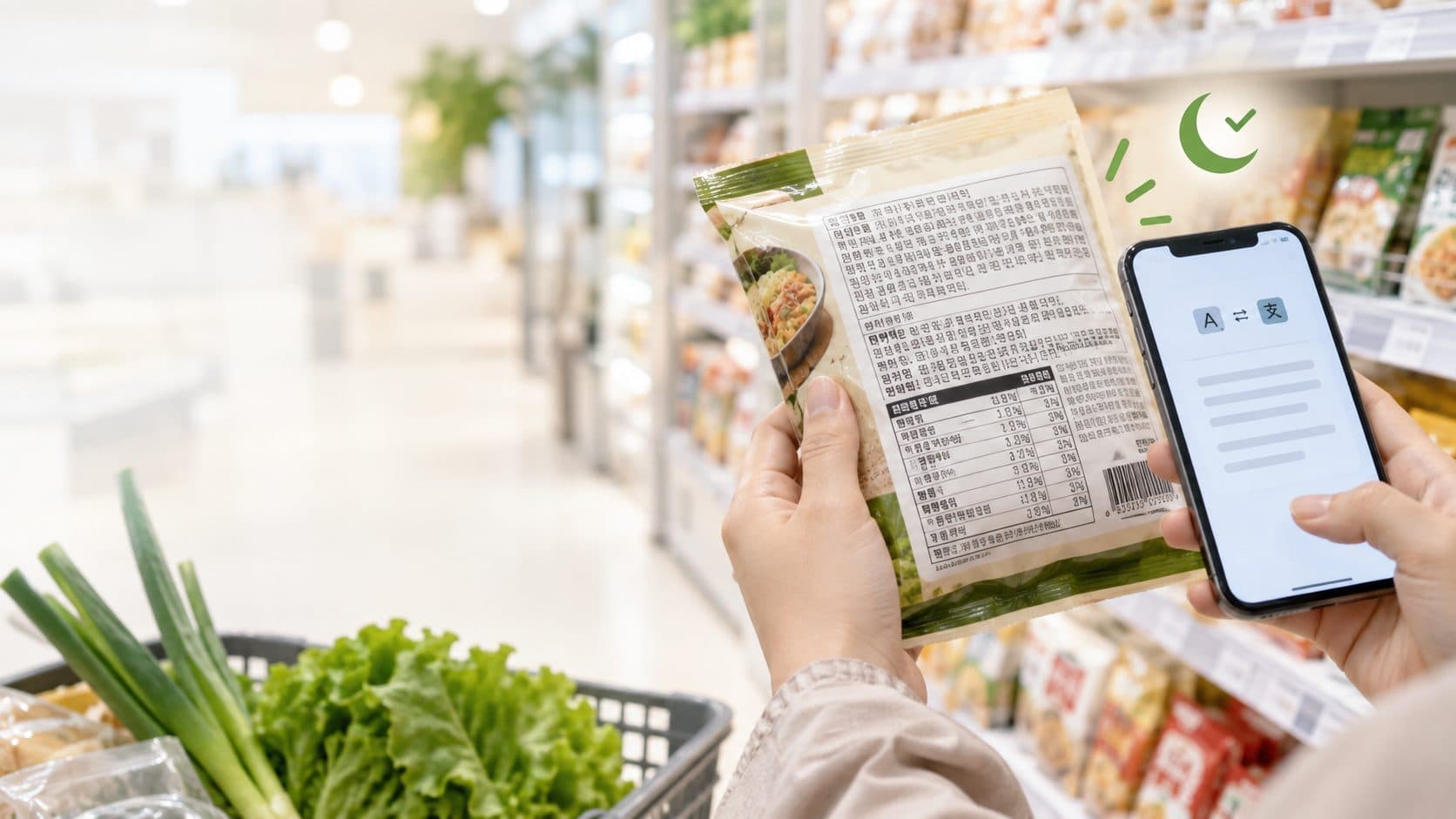
What Should You Check When Buying Packaged Food?
Start with the ingredient list and look for a recognized halal-certification mark when certification is important to you.
Pay particular attention to ingredients that may have different sources, such as:
Gelatin
Animal fats
Shortening
Emulsifiers
Enzymes
Flavorings
Meat extracts
Alcohol-containing ingredients
An unfamiliar ingredient does not automatically mean that the product is haram. Its source may simply need to be checked.
What Should You Ask at a Restaurant?
A restaurant describing itself as “Muslim-friendly” does not necessarily mean that everything served there is halal-certified.
Useful questions include:
Is the meat halal-certified?
Which organization certified the meat?
Is pork also prepared in the kitchen?
Is the same grill or cooking equipment shared?
Is the same frying oil used for other foods?
Does the dish contain alcohol or cooking wine?
This is especially useful in countries such as South Korea, where restaurants may offer dishes without pork while still using non-halal meat, alcohol-based sauces or shared cooking equipment.
Halal Is More Than “No Pork”
One of the most common misunderstandings is:
“There is no pork, so it must be halal.”
Halal involves more than avoiding pork.
For meat, the source and slaughter method matter. For processed food, ingredients matter. For prepared food, cooking and handling can matter.
A better way to think about halal food is:
Permissible ingredients + appropriate preparation + appropriate handling = greater confidence that the food is halal.
Halal Food Is for Everyone
Halal food is consumed primarily to meet Islamic dietary requirements, but anyone can eat halal food.
Rice, vegetables, fruits, seafood, lentils and countless everyday foods are naturally compatible with halal diets. Halal-certified meat and packaged products simply provide additional options and assurance for consumers who follow Islamic dietary requirements.
Looking for Halal Food in Korea?
Living in Korea can make checking ingredients, meat sources and restaurant preparation more challenging, particularly when product information is available only in Korean.
Fornur makes it easier to find halal meat, rice, spices, lentils, frozen foods and international groceries in one place.
How This Guide Was Prepared
This guide is designed to help foreign residents and visitors understand common questions before making a decision. Details should always be confirmed directly with the relevant provider or an appropriately qualified professional.
- Author
- Lucky_Nomad
- Last reviewed
- October 7, 2026