
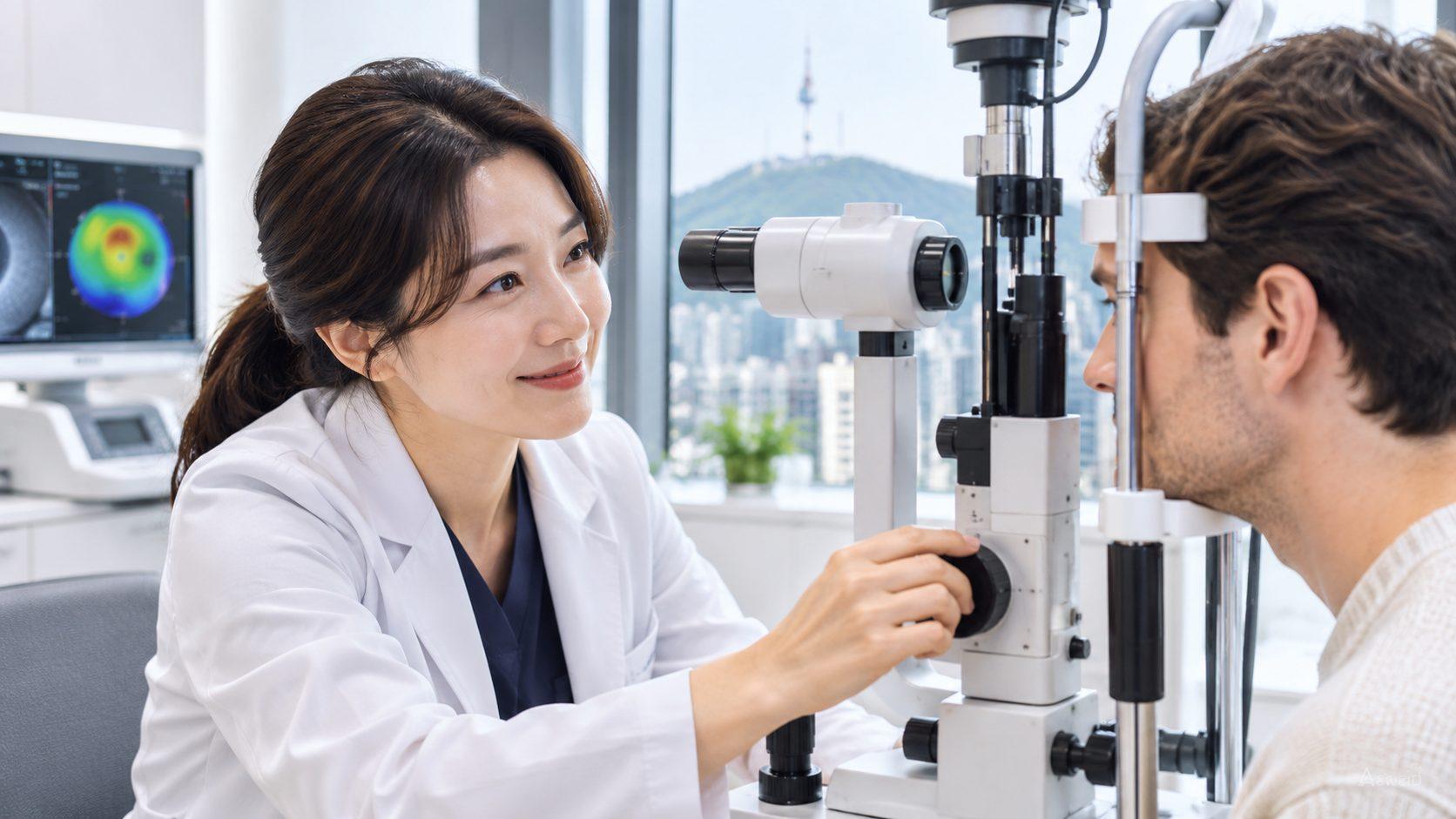
Explore LASIK eye surgery in Korea, including laser vision correction, eligibility screening, recovery expectations and important questions to ask before treatment.
Clinic details and exact pricing will be shared after we review your consultation request.
LASIK eye surgery in Korea is a laser vision correction procedure used to treat selected cases of nearsightedness, farsightedness and astigmatism. It reshapes the cornea to improve how light focuses on the retina, potentially reducing dependence on glasses or contact lenses.
During LASIK, an ophthalmologist creates a thin corneal flap, lifts it and uses an excimer laser to reshape the underlying tissue. The flap is then repositioned.
Unlike PRK and LASEK, LASIK involves a corneal flap. It also differs from SMILE, which removes a small corneal lenticule, and ICL surgery, which implants a corrective lens inside the eye.
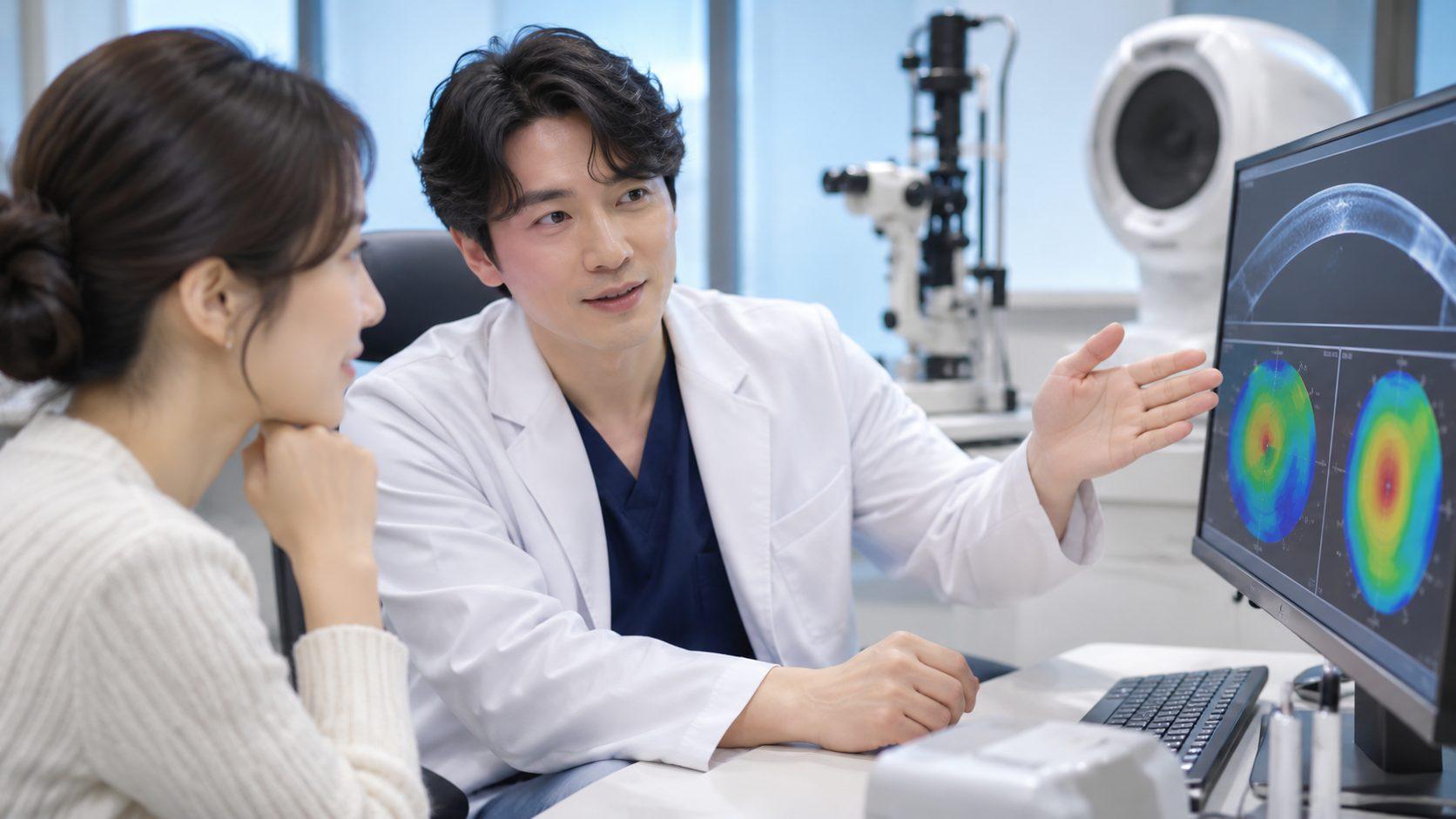
Suitability depends on prescription stability, corneal thickness, corneal mapping, tear-film quality and overall eye health.
People with significant dry eye, unsuitable corneal measurements or certain medical conditions may not qualify. The American Academy of Ophthalmology explains why comprehensive screening and realistic expectations are essential.
Vision often improves within the first few days, although dryness, light sensitivity and fluctuating vision may occur. Complete stabilization can take several months.
Potential complications include persistent dry eye, glare, halos, flap-related problems, infection, corneal ectasia and residual refractive error.
The FDA LASIK Surgery Checklist provides important information about suitability, complications and questions to discuss with your surgeon.
LASIK does not guarantee perfect vision or prevent age-related presbyopia. Some patients may still need glasses or additional treatment.
Explore Fornur's Eye Care & Vision Correction services in Korea to understand available treatment categories.
Interested in LASIK surgery in Korea? Contact Fornur to enquire about participating ophthalmology providers, eligibility assessments and possible treatment arrangements. Clinic availability, suitability and final pricing must be confirmed before booking.
Complete an eye examination covering prescription stability, corneal thickness, corneal mapping and dry-eye assessment. Share your medical history, medications and previous eye treatments. Follow contact lens instructions and discuss risks, alternatives and recovery expectations with your surgeon.
Use prescribed eye drops and protective shields as instructed. Avoid rubbing your eyes and attend all follow-up appointments. Follow your surgeon's restrictions on driving, exercise, swimming and travel. Seek urgent medical attention for severe pain or sudden vision changes.
LASIK may cause temporary or persistent dry eyes, glare, halos and reduced night vision. Less common complications include infection, flap problems, corneal ectasia and loss of visual quality. Results vary. LASIK does not guarantee 20/20 vision or permanent freedom from glasses. An ophthalmologist must confirm suitability and explain individual risks.

This page is general information, not medical advice. A licensed doctor will confirm whether this treatment is right for you.
Explore more you might be interested in.
 Eye Care & Vision Correction
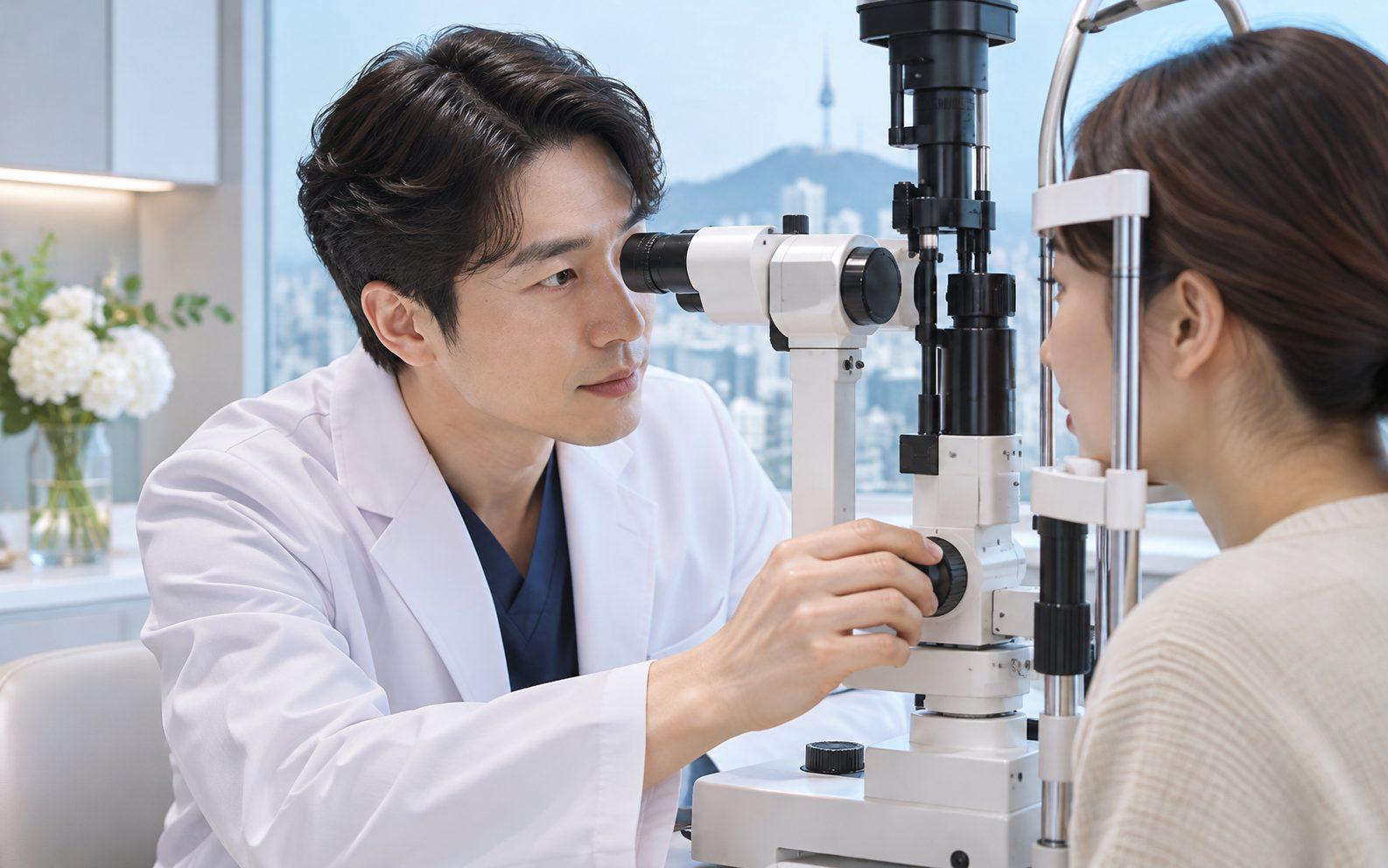
Compare LASEK and PRK surgery in Korea, including surface-laser techniques, eligibility checks, recovery and questions to ask before contacting a clinic.
 Eye Care & Vision Correction
Explore PresbyMAX vision correction in Korea, a laser-based treatment for selected patients with presbyopia. Learn how it works, who may qualify, and what to consider before surgery.
 Skin & Aesthetic
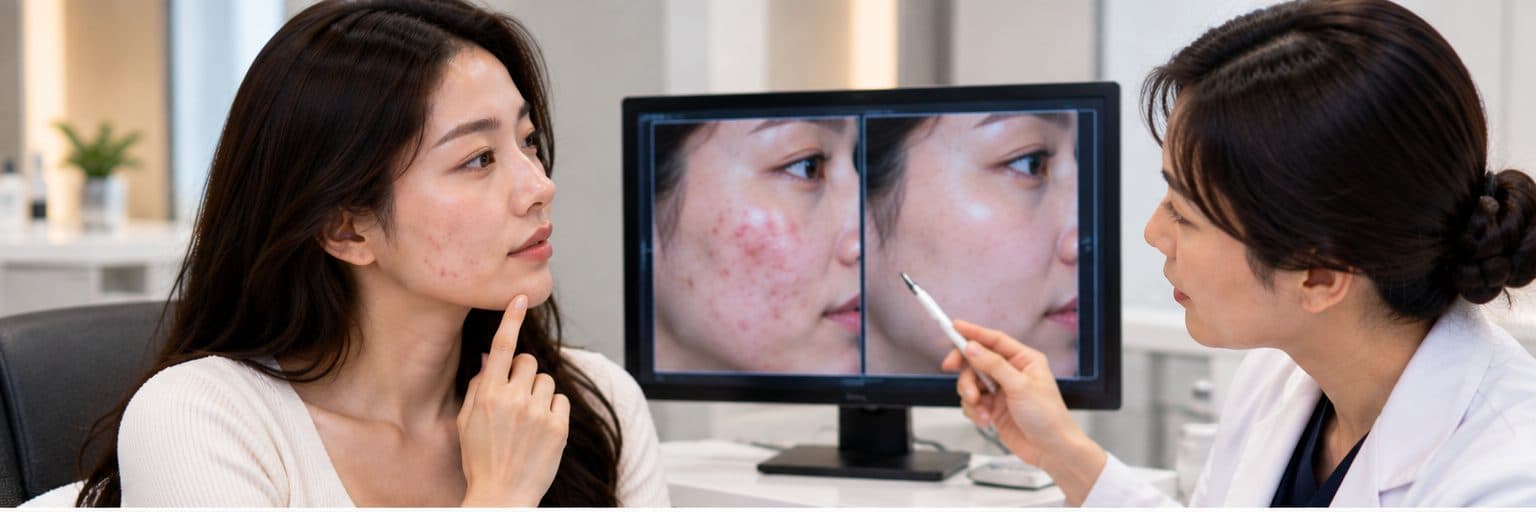
Explore acne treatment in Korea for clogged pores, inflamed breakouts and recurring acne. Understand medical options, risks and the questions to ask before planning care in Seoul
 Plastic Surgery
Explore adipose-derived stem cell programs in Korea involving fat collection, processing and selected clinical applications. The exact service and suitability require individual medical assessment.
 Skin & Aesthetic
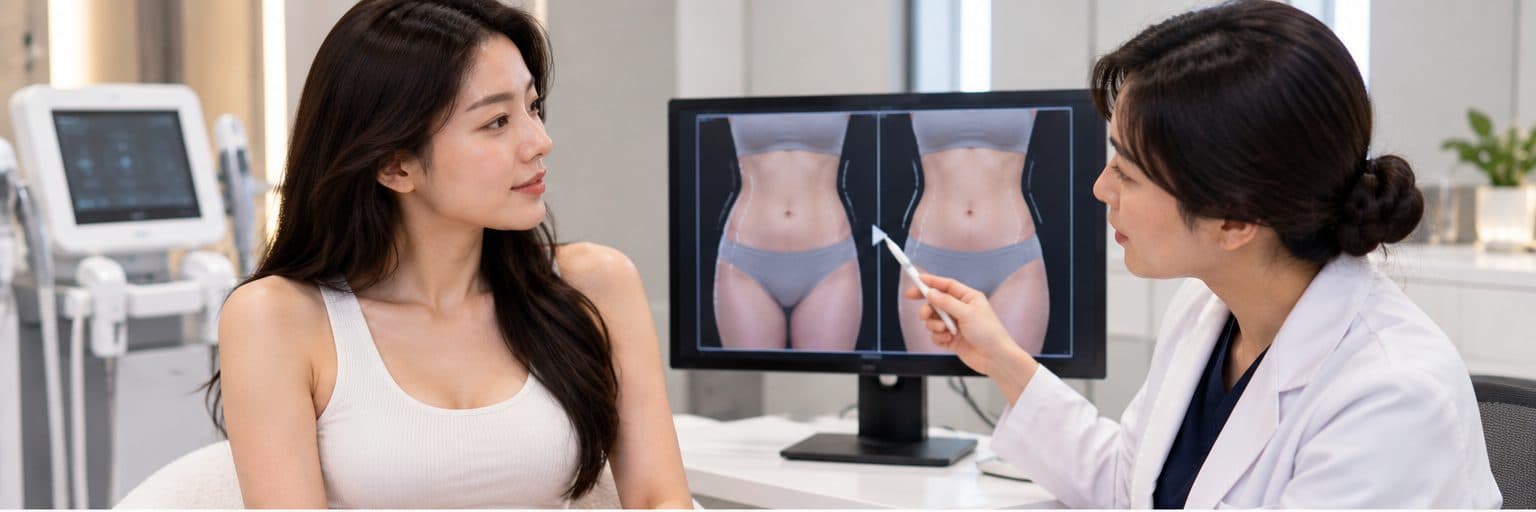
Non-surgical body contouring in Korea uses external energy-based devices to address selected areas of localised fat, reduced skin firmness or contour concerns. Compare Seoul options through Fornur.
 Skin & Aesthetic
Botox in Korea refers to botulinum toxin treatment used to temporarily reduce selected muscle activity. Compare treatment areas, products, cost factors and Seoul clinic options.
Explore more you might be interested in.
 Beauty & Medical
What does a dental implant cost in Korea? Compare 2026 published fee data, complete quote components, staged visits and follow-up questions for visitors.
 Beauty & Medical
Considering calf Botox for muscle-related leg slimming in Seoul? Compare verified service information, realistic results, cost factors and potential walking or balance risks.
 Beauty & Medical
Explore men's rhinoplasty in Korea, including bridge and tip changes, breathing assessment, cost factors, recovery and clinic-selection questions for international patients.
 Beauty & Medical
Compare epicanthoplasty vs lateral canthoplasty in Korea. Learn how inner and outer eye-corner surgery differ, including risks, scars, recovery, costs and what to ask before choosing a Seoul clinic.
