
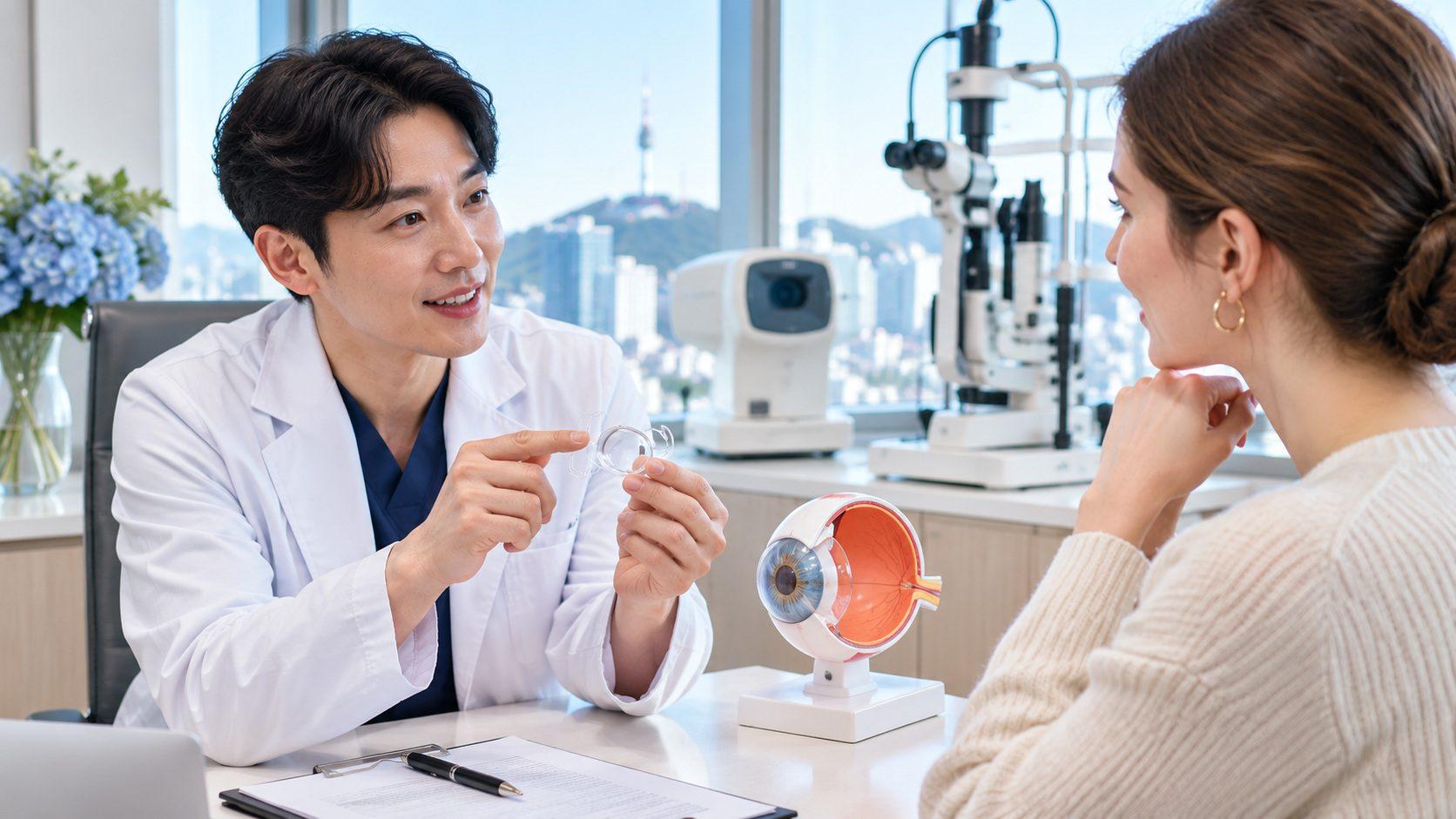
Explore ICL eye surgery in Korea, including implantable lens vision correction, eligibility assessments, recovery expectations and important questions before treatment.
Clinic details and exact pricing will be shared after we review your consultation request.
ICL eye surgery in Korea is a vision correction procedure that places an implantable collamer lens inside the eye to correct selected cases of nearsightedness and astigmatism.
Unlike LASIK, PRK and SMILE, ICL surgery does not reshape the cornea by removing tissue. Instead, an ophthalmologist inserts a specially designed lens behind the iris and in front of the eye's natural lens.
During surgery, the ophthalmologist makes a small incision, inserts the folded corrective lens and positions it inside the eye. The natural lens remains in place.
The Cleveland Clinic's ICL surgery guide explains the procedure, screening requirements and recovery expectations.
ICL may be considered for selected patients who are unsuitable for corneal laser surgery. However, eligibility depends on prescription stability, anterior chamber dimensions, corneal endothelial cell health, eye pressure and other measurements.
ICL can reduce dependence on glasses or contact lenses without removing corneal tissue. Certain lens models can also correct astigmatism.
However, ICL is an intraocular operation, and complications may include elevated eye pressure, cataract formation, infection, inflammation, glare, halos or endothelial cell damage.
The U.S. FDA's EVO ICL information describes important safety considerations. The approved lens model and eligibility rules must be confirmed for the actual clinic in Korea.
Although an implanted lens may be surgically removed or exchanged, removal is another operation and does not guarantee reversal of every complication.
Explore Fornur's Eye Care & Vision Correction services in Korea to learn about different vision correction approaches.
Interested in ICL eye surgery in Korea? Contact Fornur to enquire about participating ophthalmology providers, available lens options and eligibility assessments.
Clinic availability, treatment suitability and final pricing must be confirmed before booking.
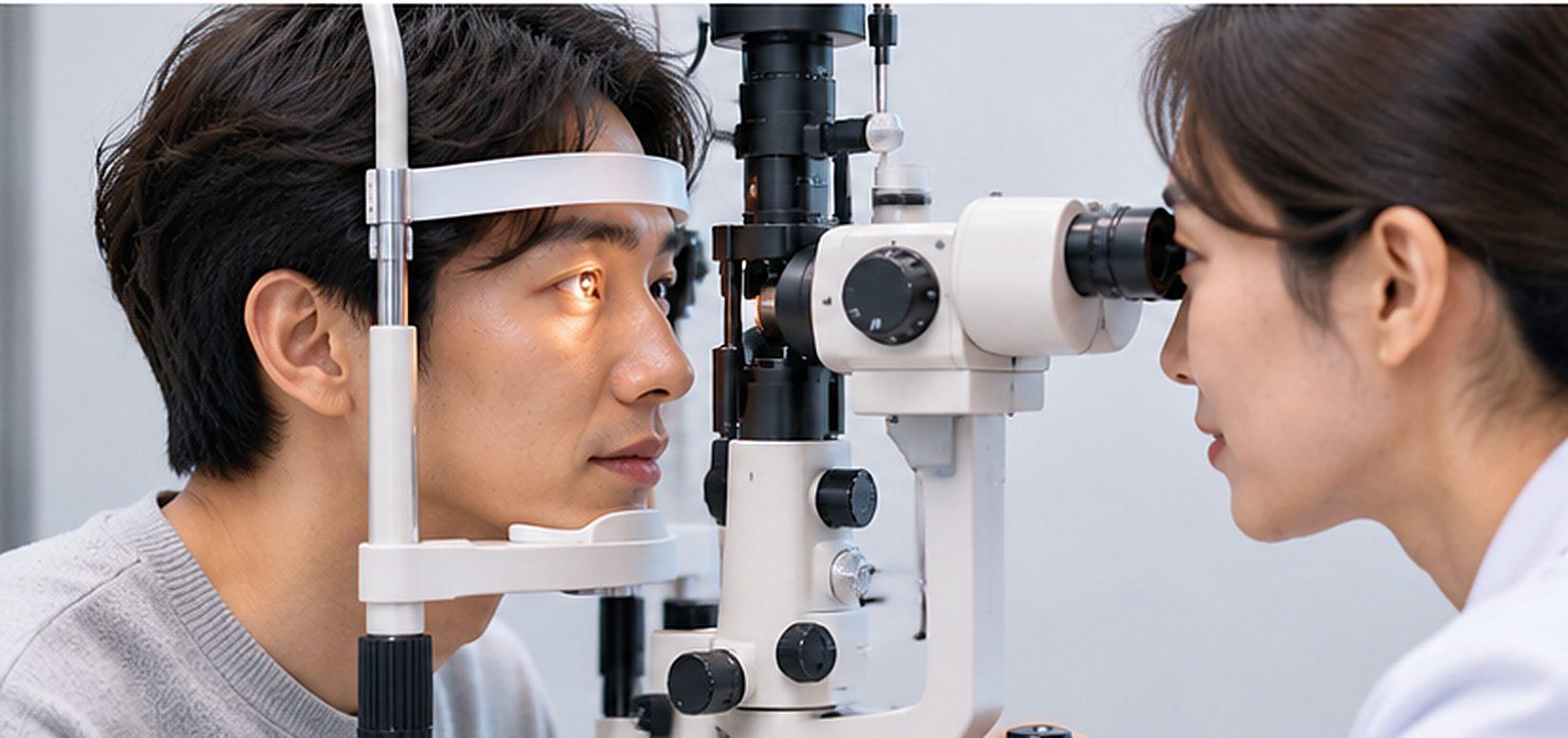
Complete a comprehensive eye assessment covering prescription stability, anterior chamber depth, corneal endothelial cell count, eye pressure and retinal health. Share your medical history, medications and previous eye treatments. Discuss the lens model, surgical risks, alternatives and required follow-up visits with your ophthalmologist.
Use prescribed eye drops and avoid rubbing your eyes. Attend scheduled postoperative examinations to monitor eye pressure, lens position and healing. Follow your surgeon's advice about driving, exercise and travel. Seek urgent eye care for severe pain, sudden vision loss or worsening redness.
ICL surgery carries risks including increased eye pressure, infection, inflammation, glare, halos, cataract formation and corneal endothelial cell loss. Some patients may require additional surgery to reposition, exchange or remove the lens. ICL does not guarantee perfect vision or lifelong independence from glasses. Regular ophthalmic monitoring remains important after implantation. A qualified ophthalmologist must confirm suitability and explain individual risks before surgery.

This page is general information, not medical advice. A licensed doctor will confirm whether this treatment is right for you.
Explore more you might be interested in.
 Eye Care & Vision Correction
Compare LASEK and PRK surgery in Korea, including surface-laser techniques, eligibility checks, recovery and questions to ask before contacting a clinic.
 Eye Care & Vision Correction
Explore LASIK eye surgery in Korea, including laser vision correction, eligibility screening, recovery expectations and important questions to ask before treatment.
 Eye Care & Vision Correction
Explore PresbyMAX vision correction in Korea, a laser-based treatment for selected patients with presbyopia. Learn how it works, who may qualify, and what to consider before surgery.
 Skin & Aesthetic
Explore acne treatment in Korea for clogged pores, inflamed breakouts and recurring acne. Understand medical options, risks and the questions to ask before planning care in Seoul
 Plastic Surgery
Explore adipose-derived stem cell programs in Korea involving fat collection, processing and selected clinical applications. The exact service and suitability require individual medical assessment.
 Skin & Aesthetic
Non-surgical body contouring in Korea uses external energy-based devices to address selected areas of localised fat, reduced skin firmness or contour concerns. Compare Seoul options through Fornur.
Explore more you might be interested in.
 Beauty & Medical
What does a dental implant cost in Korea? Compare 2026 published fee data, complete quote components, staged visits and follow-up questions for visitors.
 Beauty & Medical
Considering calf Botox for muscle-related leg slimming in Seoul? Compare verified service information, realistic results, cost factors and potential walking or balance risks.
 Beauty & Medical
Explore men's rhinoplasty in Korea, including bridge and tip changes, breathing assessment, cost factors, recovery and clinic-selection questions for international patients.
 Beauty & Medical
Compare epicanthoplasty vs lateral canthoplasty in Korea. Learn how inner and outer eye-corner surgery differ, including risks, scars, recovery, costs and what to ask before choosing a Seoul clinic.
